A detached trailer can sometimes be moved without its usual tow vehicle. Whether an operator can handle it depends on the trailer, load, location, and destination. Share those details first, then let the operator assess the job.
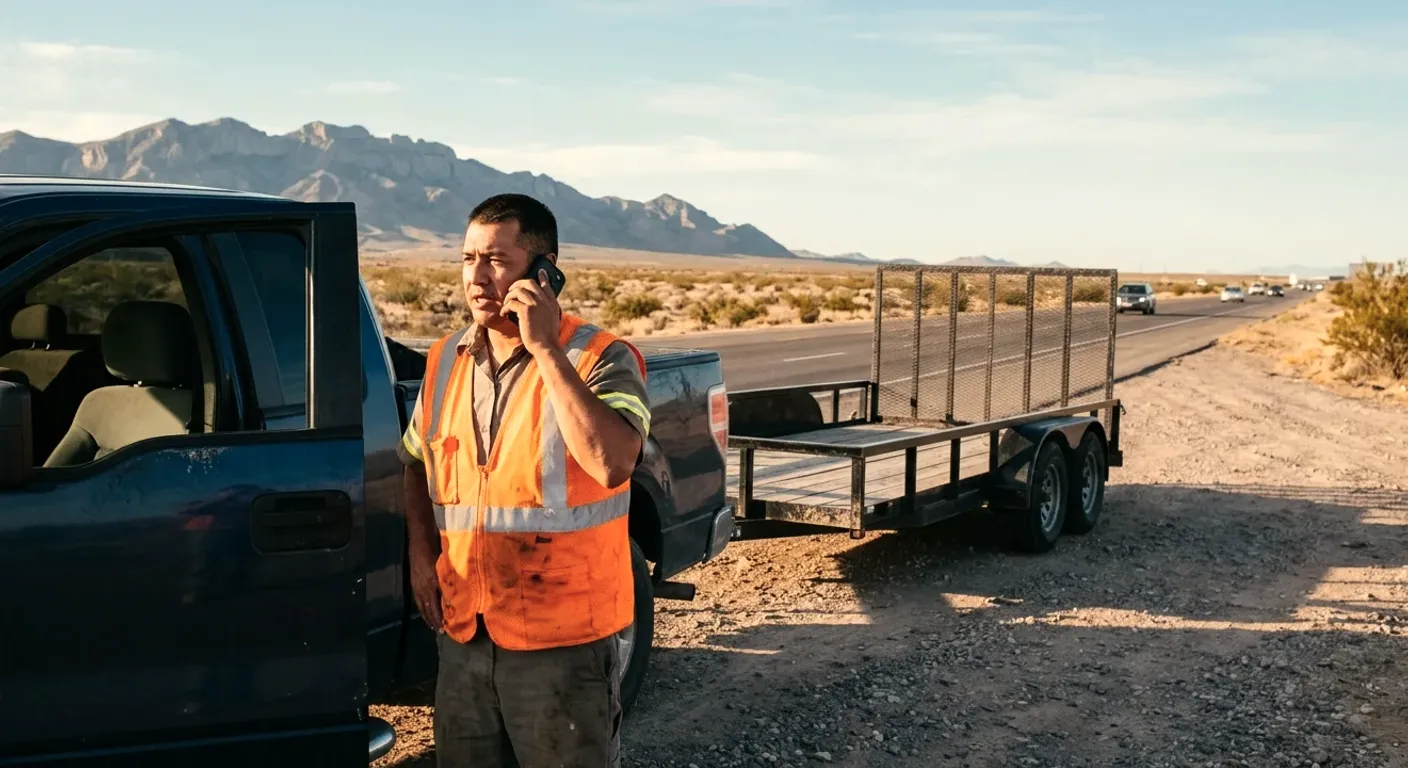
Identify the trailer type
Start by naming the trailer as precisely as you can. “Camper” or “utility trailer” helps, but photos often provide better context. A travel trailer, fifth wheel, boat trailer, enclosed cargo trailer, and equipment trailer can present different connection and access questions.
Tell the operator whether the trailer is attached to anything now. Mention any stabilizers, locks, covers, or nearby objects. Don’t remove parts or change the setup unless the operator asks you to. The goal is to describe the trailer, not prepare it yourself.
Photograph the front connection area, each side, and the rear. Include the wheels and any visible identification plate. If you have the manufacturer’s paperwork, keep it available. Don’t guess at ratings, capacities, or technical terms you don’t recognize.
This request is different from towing a car behind an RV. You’re asking whether a trailer can be moved when its regular tow vehicle is missing, disabled, or unavailable. That makes the trailer itself the starting point.
A particular operator may decline after reviewing the details. That doesn’t mean every trailer move is impossible. It means the trailer and proposed move must fit that operator’s equipment and scope of work. Quick Tow EP can connect callers with an independent local tow operator, but availability and job acceptance aren’t promised.
For local RV and trailer towing requests, begin with the exact trailer type. That first detail can prevent confusion before anyone considers the route.
Share its current location and position
The pickup point matters as much as the trailer type. Give the operator the exact location and describe where the trailer sits. A trailer beside I-10 presents a different situation from one inside a storage property.
Explain whether it’s in a marked space, driveway, campsite, dirt area, repair yard, or roadway shoulder. Mention gates, curbs, walls, parked vehicles, low branches, and tight turns. Photos should show the trailer and the open space around it.
El Paso’s road network changes quickly between neighborhoods. A pickup near Mesa Street on the Westside differs from one near Dyer Street in the Northeast. The East Side and Far East connect through routes such as Loop 375, Montana Avenue, and Horizon Boulevard. Lower Valley trips may involve Alameda Avenue, Socorro Road, or North Loop Drive.
State the correct jurisdiction too. El Paso city limits, nearby Texas communities, and New Mexico follow different rules. Sunland Park and Santa Teresa are in New Mexico, not El Paso. Socorro and Horizon City are outside El Paso city limits in Texas.
A move requested by the trailer owner is a consent tow. The operator prices that job, and the nonconsent fee tables don’t apply. Quick Tow EP doesn’t set prices or quote totals. Confirm the price directly with the operator before the trailer is hooked up.
If the trailer blocks traffic or sits at a crash scene, say that immediately. Don’t present a roadside position as an ordinary parking-lot pickup. The operator needs an accurate picture before deciding whether the request can be accepted.
Describe the load without estimating weight
Tell the operator what’s inside or attached to the trailer. Use ordinary descriptions rather than guessing weight. “Household boxes,” “camping supplies,” “a boat,” or “landscaping equipment” is more useful than an unsupported estimate.
Say whether the trailer appears empty, partly loaded, or full. Describe anything that has shifted, leaked, fallen, or become loose. If you can’t see the contents, say that. Don’t open a sealed trailer or move cargo merely to answer questions.
For an RV, mention whether personal belongings remain inside. Note visible slide-outs, exterior accessories, or anything extending beyond the main body. For a cargo trailer, describe the cargo category and how much floor space appears occupied. The operator can then ask for any missing details.
Don’t assume that a familiar truck model can handle the trailer. A question such as whether an F-150 can pull a camper can’t be answered from the truck name or trailer length alone. Exact vehicle and trailer information would be needed, and the appropriate manuals or manufacturers should be consulted.
The same caution applies to four-wheel drive. Whether it’s needed can’t be decided from the destination name alone. Surface conditions, access, and the proposed setup all matter. Give the operator current photos instead of choosing equipment yourself.
This is also the time to report visible damage. Mention a flat tire, damaged wheel area, bent component, or trailer resting at an unusual angle. Describe only what you can see. Don’t diagnose the cause or attempt loading instructions without direction from the operator.
Confirm access at the destination
A trailer move isn’t complete when it leaves the pickup point. The operator also needs to know whether the destination can receive it. Give the full destination and describe the final placement area.
Mention whether the destination is a repair facility, storage property, campground, residence, or another approved location. Confirm that the property will accept the trailer. If someone else controls the site, contact that person before arranging the move.
Describe the entrance and the space beyond it. Tell the operator about gates, turns, curbs, slopes, dirt surfaces, parked vehicles, and overhead obstacles. Recent photos from the entrance toward the parking spot are useful. A map pin alone won’t show those conditions.
Local geography can change the route and the job. A move across El Paso may involve I-10, Loop 375, US-54, or Spur 601. A destination across the state line requires special attention because Texas towing rules don’t govern a New Mexico tow. No New Mexico price should be inferred from an El Paso or Texas rule.
Weather can also change what the operator needs to assess. El Paso’s spring dust and wind can reduce visibility. Short, intense monsoon storms can bring flash flooding from July through September. Report current conditions at both ends instead of assuming the destination remains accessible.
Don’t promise a facility that the trailer will arrive at a certain time. Quick Tow EP doesn’t promise arrival times, and the independent operator decides whether to accept the work. Ask that operator for an arrival estimate and coordinate access directly with the destination.
Ask what information the operator needs
Have a short fact list ready when requesting trailer towing help. Start with the trailer type, exact pickup point, destination, and a plain description of the load. Then share photos of the trailer and both access areas.
The operator may ask for identifying details from the trailer or its paperwork. Read those details directly from the source. Don’t estimate a rating, change a number, or substitute another trailer’s information. If a requested detail can’t be found, say so plainly.
Also explain why the regular tow vehicle isn’t available. It may be elsewhere, disabled, or unsuitable for the planned move. That context helps distinguish a detached-trailer request from vehicle recovery or roadside assistance.
Before agreeing to the job, ask the operator these practical questions:
- Can you assess this trailer from the photos and information provided?
- What additional trailer details do you need?
- Do you need access approval from either property?
- Is there anything at the pickup or destination that prevents the move?
- What price applies to this consent tow?
- What arrival estimate can you provide?
The operator sets the price and receives payment directly. Confirm the amount before hookup. Don’t rely on a city nonconsent cap for a move you requested yourself.
Texas requires towing operators and towing companies working over public roads to hold the applicable licenses, subject to stated exemptions. You can check credentials through the TDLR license search. Select the relevant towing license type and search using the information the operator provides.
Quick Tow EP is a referral line, not a towing company. It owns no trucks and employs no drivers. The independent operator decides whether the trailer can be moved and what information is required.
When to call us
Call when a detached trailer needs a licensed towing professional to assess the trailer, location, load, route, and destination. Acceptance depends on the independent operator and the details of the job.
Call us at (915) 615-5465 and we’ll connect you with an independent licensed operator who handles this work. If nobody picks up, leave a voicemail.