For I-10 towing in El Paso, give the operator five things first: your direction, nearest confirmed marker, vehicle description, breakdown type, and destination. Clear details help the independent operator understand the job without guessing.
Quick Tow EP connects callers with independent, separately licensed local tow operators. We don’t perform the tow, own trucks, set prices, or promise an arrival time.
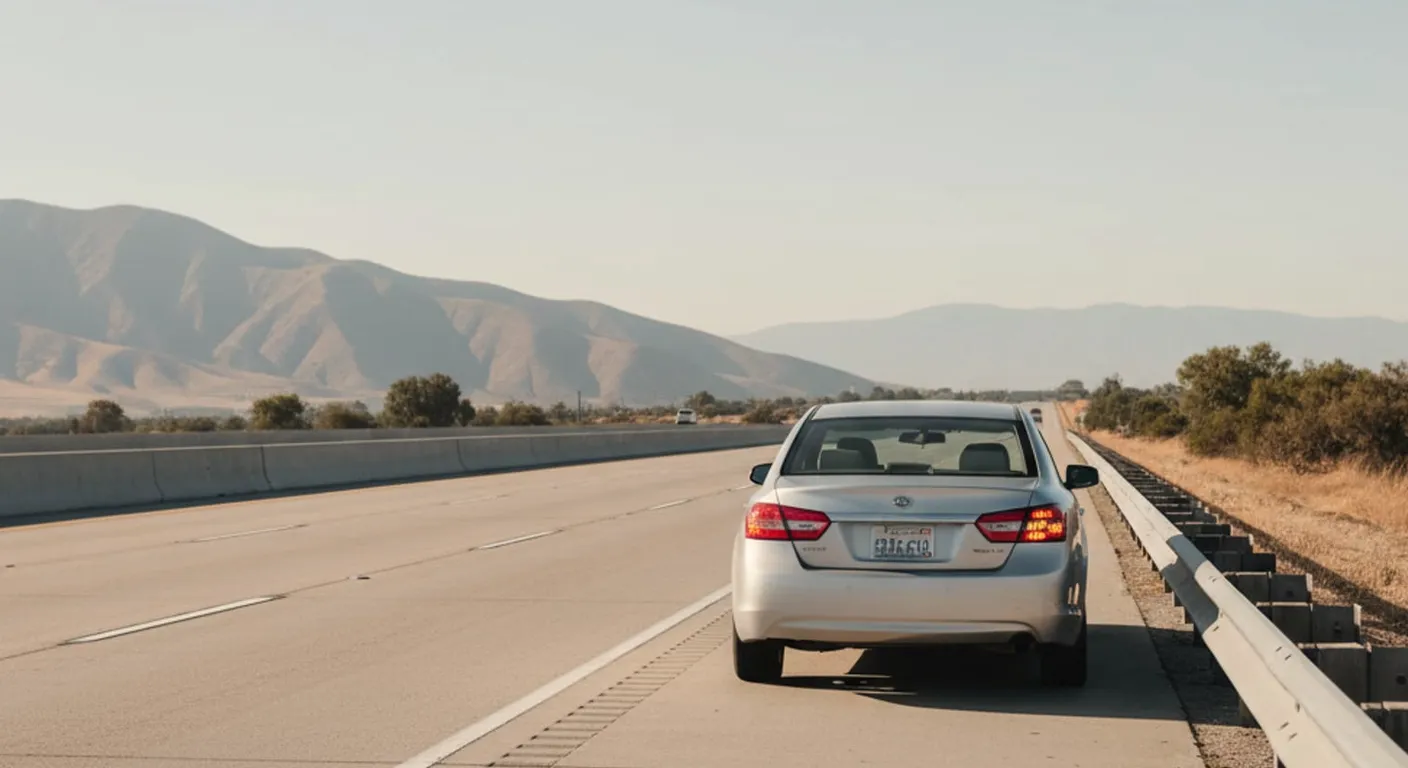
Share your direction of travel
Start with “eastbound” or “westbound.” Don’t rely on phrases like “heading toward town” or “past the mountains.” Those descriptions can mean different things across the El Paso metro.
I-10 stretches between the New Mexico line, the Westside, Central El Paso, and the eastern side of the metro. The direction of travel tells the operator which side of the highway matters. It also reduces confusion when the eastbound and westbound lanes aren’t reached from the same place.
Read the direction from a confirmed source when possible. Your phone’s map, a visible highway marker, or a recent sign may show it. If you aren’t certain, say that plainly. A confirmed detail is more useful than a confident guess.
Next, describe your general part of the corridor. You might report the Westside under the Franklin Mountains, Central El Paso, or the eastern stretch toward Horizon Boulevard. If your map shows I-10 near Loop 375, US-54, or another named corridor, share exactly what it displays.
State whether you’re still on I-10 or have reached another road. A driver near Horizon Boulevard isn’t in the same situation as one near the New Mexico state line. Crossing into Sunland Park also changes the state and the rules governing a tow.
Give these details in one short statement:
“I’m on I-10 westbound. My map places me near [confirmed marker]. I haven’t left the highway.”
That opening gives the operator a usable starting point. You can then add more precise location information.
Identify the nearest confirmed location marker
Your location marker should come from something you can verify. Use the route name, a mile marker, a map pin, or wording from a visible sign. Don’t invent an exit number from memory.
Open your phone’s map and check the location label. If it provides coordinates, a cross street, or a named interchange, read that information exactly. You can also share a location pin directly with the operator if that option is available.
Describe where the vehicle sits relative to the road. Say whether it’s in a travel lane, on a shoulder, or off the highway. Don’t just say you’re “near I-10.” That could mean the vehicle is on the interstate, beside a frontage road, or in a nearby parking area.
El Paso’s named corridors can help clarify the general area. These include Loop 375, US-54 Patriot Freeway, Spur 601 Liberty Expressway, Mesa Street, Alameda Avenue, Montana Avenue, and Horizon Boulevard. Only name one when your map or a sign confirms it.
Jurisdiction matters too. Tell the operator if the confirmed location is inside El Paso, elsewhere in Texas, or across the New Mexico line. Sunland Park, Santa Teresa, Chaparral, and Anthony, New Mexico, aren’t governed by Texas towing rules. Don’t assume “El Paso area” means the vehicle is within El Paso city limits.
TxDOT’s El Paso HERO program covers a defined part of I-10 from Transmountain Road to Horizon Boulevard. Its free highway services can include a tire change, air, fuel, water, a jump start, minor repairs, traffic control, or moving a stranded vehicle away from a travel lane. HERO isn’t a tow to a repair shop. Check the TxDOT page for current operating information and service details.
When calling for emergency towing, give the independent operator your confirmed marker before explaining the mechanical problem.
Describe the vehicle and breakdown
Tell the operator what kind of vehicle is disabled. Include the make, model, color, and general vehicle type. Mention whether it’s a sedan, pickup, SUV, motorcycle, RV, commercial vehicle, or vehicle pulling a trailer.
Report the vehicle’s actual condition. Useful descriptions include a dead battery, flat tire, overheating, collision damage, steering problem, or a vehicle that won’t start. If you don’t know the cause, describe what happened instead of diagnosing it.
You could say:
“The engine stopped, and it won’t restart.”
That’s better than naming a failed part without confirmation. Tell the operator about visible damage, locked wheels, a missing tire, fluid beneath the vehicle, or anything else that may affect how the vehicle can be handled.
Share whether the car is carrying passengers, cargo, or pulling something. If a trailer is attached, describe it. If the vehicle is unusually long, tall, or heavy, say so. Don’t guess its exact weight. Give the year, make, and model so the operator can assess the information.
El Paso weather can also explain the immediate problem. The National Weather Service’s July normal high is 96.1°F, and heat shortens battery life. July through September can bring short, intense monsoon storms and flash flooding. March and April bring dust and wind, including low visibility on I-10.
Describe the current conditions without overstating them. “The car stalled during blowing dust” is useful. “The engine was ruined by dust” isn’t confirmed unless a qualified professional has diagnosed it.
Finally, tell the operator whether the vehicle can roll, steer, or shift into neutral. If you don’t know, say so. Don’t attempt a mechanical test solely to answer the question.
Choose a practical destination
A tow request needs a destination, even when you haven’t chosen the exact address. Tell the operator whether you want the vehicle taken to a repair shop, dealership, home, storage facility, or another lawful location.
Confirm that the destination will accept the vehicle. A closed business, restricted property, or incorrect address can change the job after it begins. If you haven’t confirmed a shop, tell the operator that the destination is still undecided.
Keep the route in mind. A tow from the Westside to a Westside destination differs from a trip across the metro. Likewise, a destination across the New Mexico line involves a different state jurisdiction. Give the full destination address before agreeing to the tow.
Don’t ask the operator to choose a repair facility based on an assumed partnership. Quick Tow EP doesn’t own a shop, yard, or storage lot. The independent operator may be able to discuss destination options, but you should verify the address and acceptance requirements yourself.
A breakdown doesn’t always require a tow to a shop. TxDOT HERO may provide certain roadside services within its stated coverage area and published hours. It doesn’t provide a tow to your chosen destination. If the vehicle needs transport, discuss that separately with the towing operator.
After a crash or police-ordered removal, you may not control the destination. El Paso Police may have vehicles taken to the City of El Paso Municipal Vehicle Storage Facility. The EPPD vehicle towing page explains how to locate a vehicle and what documents may be required for release.
For a driver-requested tow, state the destination before hookup. That gives the operator the information needed to discuss the job and its charges.
Confirm charges with the independent operator
Quick Tow EP doesn’t set a price or quote a total. You’ll deal with and pay the independent tow operator directly. Confirm the charges with that operator before the truck hooks up.
Start by explaining that this is a driver-requested tow after a breakdown. That generally makes it a consent tow, meaning you called and chose the service. The nonconsent tow cap tables don’t set the price for a consent tow. The operator prices the job.
Ask what services are included and what could add to the charge. Give the exact pickup location, destination, vehicle details, and breakdown condition first. Missing information can prevent the operator from assessing the requested work accurately.
Also ask the operator for an arrival estimate. Quick Tow EP doesn’t promise availability or an arrival time. The line may go to voicemail when nobody is free to answer.
Don’t confuse a voluntary breakdown tow with a police-ordered, incident-management, or private-property tow. Inside El Paso city limits, City Code Chapter 12.54 governs nonconsent towing charges. Outside El Paso city limits in Texas, statewide TDLR limits may apply unless a city or the county sets lower limits. New Mexico follows its own laws, and no Texas figure applies there.
The vehicle’s precise location therefore matters before discussing any legal fee limit. “I-10 near El Paso” isn’t enough to establish the governing jurisdiction.
If you want to check a Texas towing credential, use the TDLR license search. Search under tow truck operators using the operator’s name, license number, city, county, or ZIP code.
If police ordered the tow inside El Paso, review the EPPD towing information and identify the facility holding the vehicle. Don’t use a consent-tow discussion as a substitute for the rules covering a police-ordered removal.
Before agreeing, repeat the core details: pickup point, vehicle, destination, requested service, and discussed charges. Keep any information the operator provides. A short, accurate call is better than filling gaps with guesses.
When to call us
If your disabled vehicle needs transport, call us at (915) 615-5465. We’ll connect you with an independent, separately licensed local tow operator. If nobody picks up, leave a voicemail.