A “tow car to tire shop” search usually starts with one decision. Can roadside tire help solve the immediate problem, or does the car need transportation? The answer depends on the spare, wheel condition, current location, and destination.
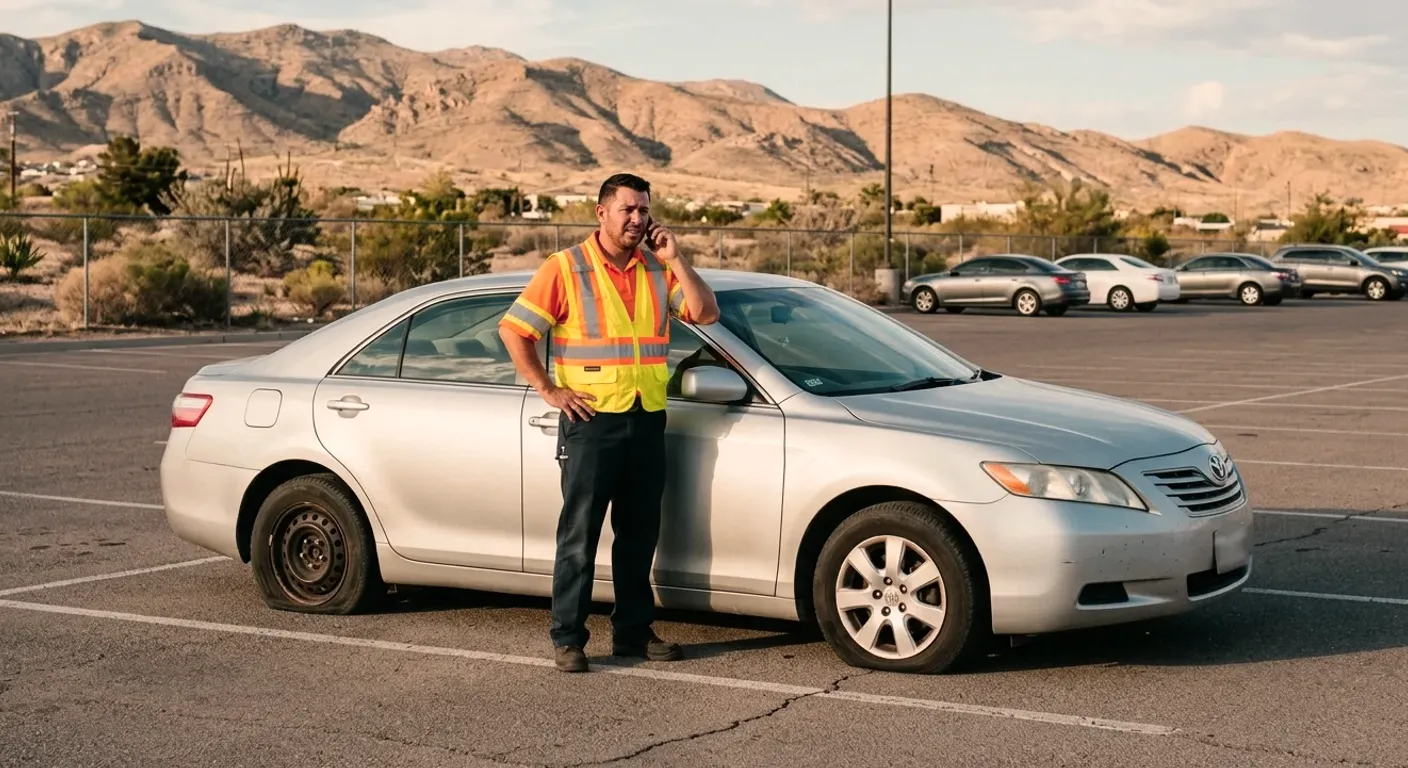
Assess the tire problem from a safe place
Start the assessment only after you’re in a place you consider safe. You don’t need to diagnose the tire or crawl beneath the car. The goal is to gather enough information for the next call.
Note which tire is affected and what you can see. Is it simply low, visibly flat, or separated from the wheel? Did the problem begin while parked, or after hitting something? Is the car still sitting normally, or does one corner look unusually low?
Location also changes the decision. A flat in a parking lot near Mesa Street differs from one on I-10. A car along Loop 375 or US-54 may need help getting out of its current position before any shop visit can happen. Don’t assume that every roadside service includes transportation to a tire shop.
El Paso’s road network crosses several jurisdictions. El Paso proper follows city rules. Horizon City, Socorro, and other communities outside city limits don’t. Sunland Park and Santa Teresa are in New Mexico, where Texas towing rules don’t apply. Tell the operator exactly where the car sits, including the nearest road or cross street.
Weather can add context without changing the basic choice. Summer highs normally run in the mid-to-upper 90s. Monsoon storms from July through September can bring flash flooding. Spring dust and wind can reduce visibility on I-10. Describe the conditions you’re facing, then let the operator discuss what help may fit.
Check whether the spare is usable
A spare can make flat tire help a practical option, but its presence doesn’t settle the question. Some cars have no spare. Others carry an inflator kit, a temporary spare, or a full-size wheel.
Before requesting roadside help, confirm what’s actually in the car. Check whether the spare is present and whether it appears ready for use. Also locate any wheel-lock key or vehicle-specific tools you already have. Don’t assume an operator carries a matching wheel-lock key.
Tell the person handling your call what you found. Useful details include the vehicle’s year, make, and model. Mention whether the affected tire is front or rear. Say whether you have a spare, an inflator kit, or neither.
A spare may not resolve the situation if more than one tire is affected. The same applies when the spare appears unusable or required pieces are missing. Roadside help also may not fit when the wheel, suspension area, or surrounding bodywork appears damaged.
Don’t ask a referral line to diagnose the car from a description. Quick Tow EP connects callers with independent, separately licensed local tow operators. It doesn’t perform repairs, own trucks, or promise that an operator can replace a tire.
If the available information is unclear, describe only what you can observe. The operator can decide what equipment may be appropriate. That conversation prevents a simple flat-tire request from hiding a different transportation need.
Know when roadside help may fit
Roadside help may fit when the problem is limited to one tire and a usable spare is available. It may also fit when adding air is enough for the immediate situation. Neither result should be assumed before someone assesses the vehicle.
On covered El Paso highways, the TxDOT HERO program offers free flat-tire changes or air. It also provides fuel, jump starts, minor repairs, and help moving stranded vehicles from travel lanes or shoulders. Its covered routes include parts of I-10, Loop 375, and US-54. HERO isn’t a tow to a tire shop.
That distinction matters. Roadside service addresses the immediate roadside problem. A tow transports the car to another location. If the tire can’t be handled where the car sits, or the wheel may be damaged, transportation may be the better request.
Avoid promising yourself that a temporary spare completes the entire job. Its availability answers only the immediate mobility question. The vehicle may still need a tire shop afterward.
The operator sets the price for a consent tow, which is a tow you request. The nonconsent cap tables don’t set that price. Ask how the charge will be calculated and confirm the current amount before the truck hooks up.
Quick Tow EP doesn’t set prices or quote totals. You’ll deal with and pay the independent operator directly. You can also check a Texas towing operator through the TDLR license search.
Choose a tire shop that can accept the car
Pick the destination before requesting the tow when possible. A shop’s name alone isn’t enough. Confirm that the location can accept the car and handle the tire or wheel issue you described.
Call the shop directly. Give them the vehicle’s year, make, and model. Explain whether the tire is flat, separated, or accompanied by visible wheel damage. Ask whether they can receive a towed vehicle and where it should be placed.
Also confirm that you’ve reached the correct branch. El Paso has long east-to-west travel corridors. A destination near Horizon Boulevard isn’t interchangeable with one near Mesa Street. The wrong branch can turn a straightforward trip into another transportation decision.
Access across the metro matters too. Downtown, the Lower Valley, the Northeast, and the Westside sit on different route networks. Horizon City and Socorro are outside El Paso city limits. Sunland Park is across the New Mexico state line. Give both the pickup and destination addresses to the operator so the route and jurisdiction are clear.
Don’t assume a closed shop will accept an unattended car. Don’t assume there’s a designated drop area unless the shop confirms it. If another person will meet the vehicle, share that arrangement with the operator.
You’ll also need a plan for the keys. Ask the shop how it receives them and tell the operator what the shop said. Quick Tow EP can connect you with an operator, but it doesn’t coordinate shop intake or guarantee that a destination will accept the car.
Share the wheel condition with the operator
The phrase “flat tire” can describe several different situations. A tire that lost air while parked isn’t the same as a wheel that struck a curb or road debris. Give the operator the clearest description you can without attempting a repair diagnosis.
Mention any visible change around the wheel. That includes a bent-looking rim, a tire separated from the rim, or bodywork resting close to the tire. Report unusual wheel angles or leaking fluid if you can already see them. Don’t move parts or test the vehicle just to gather more details.
Photos may help if the operator asks for them. A wide view can show how the car sits. A closer view can show the affected wheel. The operator decides whether those images are useful and what towing equipment may fit.
Vehicle details matter here too. Share the year, make, model, and whether it’s an electric vehicle. Mention modifications or unusually low clearance if they affect access to the car. Don’t choose the truck type yourself based on an online guess.
If you need to tow a car with a damaged wheel, say that at the beginning of the call. Don’t reduce the description to “just a flat.” A complete description helps the independent operator evaluate the request before arriving.
Finally, repeat the pickup location and confirmed tire-shop destination. Include the nearest named corridor when helpful, such as Alameda Avenue, Montana Avenue, Dyer Street, or Socorro Road. Clear location details are especially useful when similar street names cross different parts of the metro.
When to call us
Call when roadside tire help doesn’t fit, the spare isn’t usable, or the car needs transportation to a shop. Call us at (915) 615-5465 and we’ll connect you with an independent licensed operator who handles this work. If nobody picks up, leave a voicemail.