An AWD car can be towed, but the correct method depends on the exact vehicle. Check its current owner’s manual before approving any setup, and don’t accept a promise of damage-free transport.
Check the manual for the exact vehicle
Start with the owner’s manual for the car’s make, model, and model year. That’s the controlling source for the vehicle, not general advice about AWD cars.
Look for sections labeled “towing,” “emergency towing,” “roadside assistance,” or “transporting the vehicle.” Read the instructions that match the current situation. A disabled car may have different instructions than a car that can start and move.
Use the current manual for that exact vehicle. Instructions from another model year may not apply. Advice for a similar-looking trim may also be wrong. If the printed manual isn’t available, look for an official digital copy from the manufacturer. Don’t rely on a forum post or a short video when the manufacturer’s instructions are accessible.
Write down any instructions the operator needs before work begins. If the manual identifies an approved towing method, show that page directly to the operator. If it lists prohibited methods, point those out too. Don’t paraphrase technical wording when you can share the actual page.
The specific towing requirements for every AWD vehicle couldn’t be confirmed from Quick Tow EP’s approved claims ledger. That means we can’t responsibly tell every driver to use one universal setup. The manual and the independent operator must guide that decision.
If the manual can’t be found, say so clearly. Give the operator the full vehicle details and ask how the proposed method fits that vehicle. You can also contact the manufacturer or a dealership for vehicle-specific instructions before authorizing the move.
Tell the operator the drivetrain type
Tell the operator that the car is AWD during the first conversation. Don’t wait until equipment is being positioned.
Give the full year, make, model, and trim when known. Read those details from the registration, insurance card, vehicle screen, or manual. A badge on the body isn’t a substitute for the exact vehicle information.
Be clear about what you know and what remains uncertain. If you aren’t sure whether the car is AWD, say that. Don’t guess based on appearance. Ask the operator to pause while you check the manual or another vehicle record.
Also explain where the car is located. A shoulder on I-10 creates a different working setting than a parking space near Mesa Street. Loop 375, US-54, Montana Avenue, and Horizon Boulevard also place the operator on different approaches across the metro. Give the direction of travel, a nearby exit, and a safe landmark when possible.
State the jurisdiction accurately. El Paso proper is in Texas. Sunland Park and Santa Teresa are in New Mexico. Texas towing rules don’t apply across the state line. Fort Bliss also has installation rules for work performed on post.
Quick Tow EP is a referral line. We connect callers with independent, separately licensed local tow operators. The operator handles the work, chooses whether to accept it, and sets the price. Confirm the proposed charge with that operator before the vehicle is hooked up.
For a Texas tow, you can check an operator through the TDLR license search. Search by operator name, license number, city, county, or ZIP code.
Describe whether the wheels can roll
Tell the operator what the car can and can’t do. Avoid a broad statement such as “it’s completely dead” when you can provide specific observations.
Say whether the engine or vehicle system starts. Explain whether the transmission selector moves and whether the car can enter neutral. Tell the operator if the steering turns, the parking brake releases, and each wheel appears able to roll.
Don’t force a control or attempt an unapproved procedure. If the manual gives steps for a dead battery, locked transmission, or towing mode, follow that text exactly. If those instructions aren’t available, ask the operator what information is needed before anything moves.
Describe visible problems without diagnosing them. Useful statements include:
- The front-left wheel is turned and doesn’t appear to straighten.
- The rear-right tire is flat.
- The steering wheel is locked.
- The car won’t shift out of park.
- A wheel is against a curb.
- The car is in a garage with limited overhead space.
- The vehicle is off pavement or sitting at an angle.
These details help the independent operator evaluate the scene. They don’t establish which towing method is correct. That decision still needs to follow the exact vehicle instructions and the actual conditions.
Location matters here too. A car stopped along I-10 or Loop 375 may be exposed to moving traffic. Texas law covers stationary tow trucks using the required visual signals. Approaching drivers must change lanes when the road has at least two lanes in that direction, or reduce speed as directed by Transportation Code 545.157.
If you’re within the TxDOT El Paso HERO coverage area during its listed operating hours, HERO may help move a stranded vehicle out of a travel lane or off a shoulder. It isn’t a tow to a repair shop.
Review the proposed towing method
Ask the operator to explain the towing method before the car is moved. Compare that explanation with the current owner’s manual.
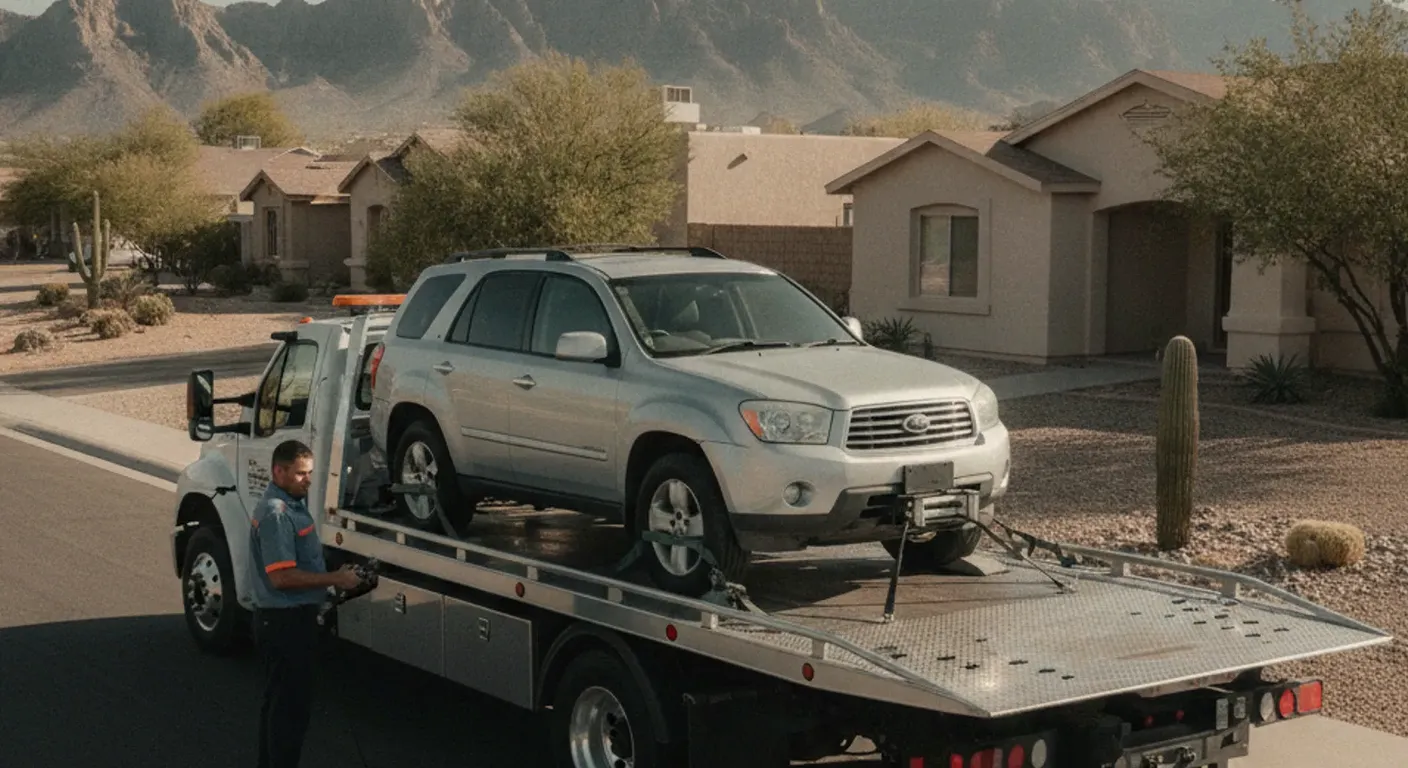
The operator may discuss flatbed towing or another setup. The presence of a flatbed doesn’t, by itself, prove that every step is correct for your AWD car. Ask how the vehicle will be loaded, secured, and unloaded under the manufacturer’s instructions.
Keep the conversation simple and specific:
- What method do you propose for this exact vehicle?
- Does that method follow the current owner’s manual?
- What will happen if the transmission won’t enter neutral?
- How will the car be moved if one wheel can’t roll?
- Are any dollies, go-jacks, or other equipment proposed?
- Where will the vehicle be delivered?
- What price does the operator set for the requested tow?
Quick Tow EP can’t approve a towing method, quote a total, or promise that damage won’t occur. The independent operator is responsible for explaining the proposed work. You decide whether to authorize it.
Don’t let urgency erase the verification step. El Paso’s July normal high is 96.1°F, and monsoon storms from July through September can bring short, intense rain and flash flooding. Spring dust and wind can reduce visibility on I-10. Move yourself away from traffic or rising water when you can do so safely, then review the plan from a safer position.
If the explanation conflicts with the manual, don’t approve the move until the conflict is resolved. Ask the operator to reconsider the setup. You can also contact the manufacturer or dealership for guidance tied to that exact vehicle.
Document the car before it moves
Take clear photos before the operator begins, if the location is safe. Don’t stand in a traffic lane or place yourself between vehicles to get a picture.
Photograph all four sides of the car. Include the wheels, bumpers, lower body panels, glass, and any existing damage. Take wider images showing the vehicle’s position, then closer images of scratches, dents, broken parts, or flat tires.
Save a photo of the dashboard when possible. Warning messages, mileage, gear position, and other visible information may help establish the car’s condition at that moment. Don’t post images containing personal information.
Record the year, make, model, trim, and visible drivetrain label. Save the manual page you reviewed. Note the operator’s name, towing company, license number, proposed method, destination, and price. For a Texas operator, compare the license information with the TDLR search result.
Make sure the destination is specific. A repair shop name alone may be unclear when several locations share a brand. Confirm the street address directly with the operator and the receiving business. Don’t use an unverified address from memory.
Remove personal items when it’s safe and practical. Keep your identification, registration, insurance information, keys, medication, and essential belongings with you. If law enforcement ordered the tow, ask the responsible agency where the vehicle is going.
After delivery, inspect the car again before signing paperwork that describes its condition. Take another set of photos from similar angles. Documentation doesn’t promise a particular outcome, but it gives everyone a clearer record of the vehicle before and after transport.
When to call us
Call when an AWD car can’t be moved normally and the correct towing method needs a licensed professional. Call us at (915) 615-5465 and we’ll connect you with an independent licensed operator who handles this work. If nobody picks up, leave a voicemail.