An empty fuel gauge in East El Paso leaves you with two immediate tasks. Identify your exact location, then explain what your vehicle needs before accepting roadside help.
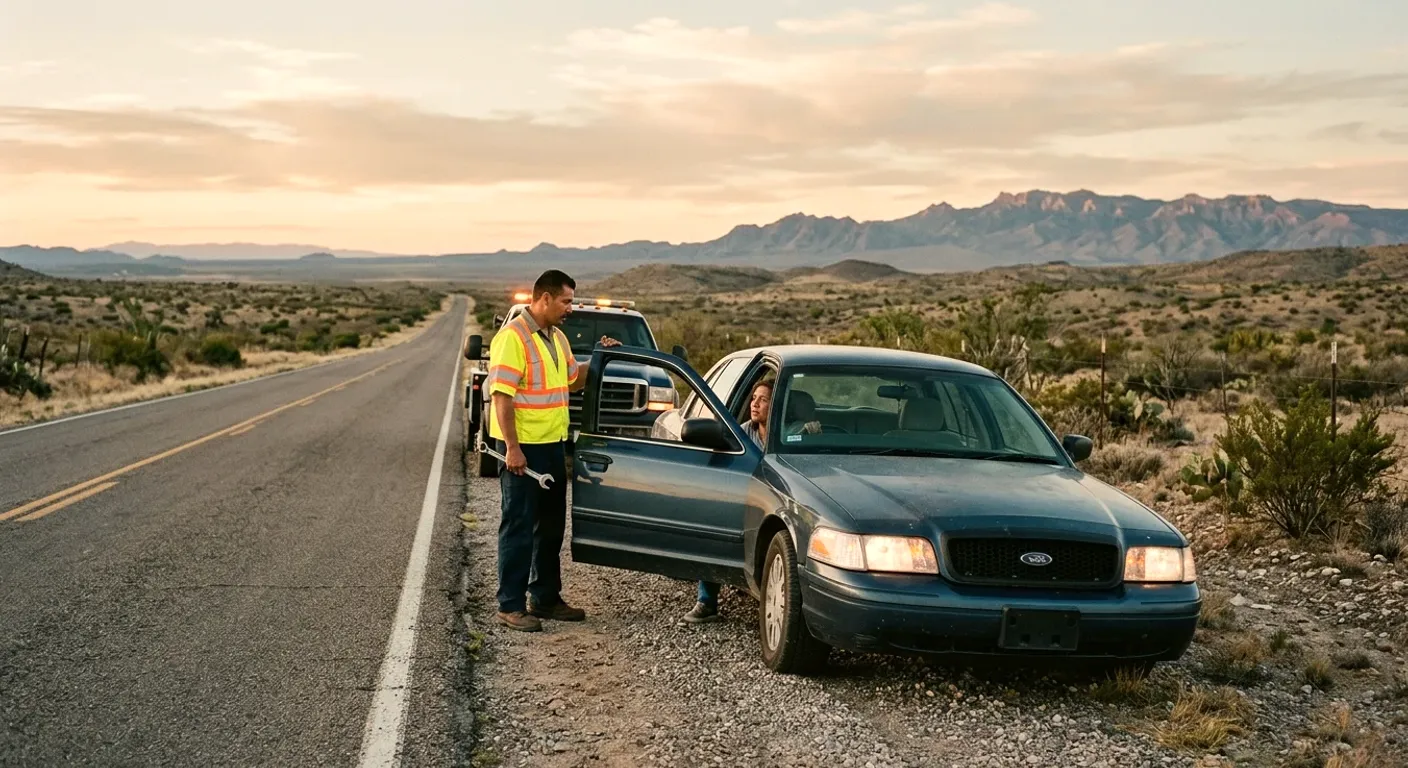
Confirm your location and direction
Start with more than “East El Paso.” The Eastside covers several major corridors, and similar road names can cause confusion. Give the operator enough detail to understand which part of the area you mean.
Name the road first. Major East El Paso routes include I-10, Loop 375, Montana Avenue, Horizon Boulevard, and Spur 601. Loop 375 is often called Joe Battle on the east side. Montana Avenue is also US-62/180. Those alternate names can help when your phone and nearby signs use different labels.
Share your direction of travel when it applies. For example, say whether you were traveling east or west on I-10. On Loop 375, describe the direction shown on the nearest sign. Add the last exit you passed, the next visible exit, or a nearby cross street.
A business name or parking-lot entrance can also narrow the location. If your phone shows a location pin, read the road name before sending it. Check whether the pin sits on the correct side of a divided roadway.
City boundaries matter east of El Paso. East El Paso and the Far East inside El Paso city limits aren’t the same jurisdiction as Horizon City, Socorro, Sparks, or Montana Vista. Don’t shorten a Horizon City location to “East El Paso.” Give the city shown on your map.
The same care applies near the New Mexico line. Sunland Park and Santa Teresa are in New Mexico, not Texas. A clear city and state keeps the request tied to the correct location.
Describe the vehicle and fuel type
Next, describe the vehicle without guessing. Give the make, model, color, and approximate model year. Include the license plate if the operator requests it. These details help distinguish your vehicle from others nearby.
State the fuel type shown on the vehicle or in its records. Don’t rely only on memory if you’re uncertain. Check the fuel-door label, dashboard information, owner’s manual, or another reliable vehicle record. Tell the operator plainly if you can’t confirm the correct fuel.
Don’t assume every independent operator carries every fuel type. Ask what that specific operator can provide before accepting service. Quick Tow EP doesn’t own trucks or carry fuel. We connect callers with independent, separately licensed local tow operators, and availability isn’t promised.
Vehicle size matters too. Tell the operator whether you have a passenger car, pickup, van, SUV, RV, or another type of vehicle. Mention an attached trailer. Use “pickup” or the exact model instead of saying only “truck,” since that word can describe very different vehicles.
Also explain what happened before the engine stopped. You can say the fuel gauge showed empty, the low-fuel warning appeared, or you believe the vehicle ran out of gas. Don’t diagnose a fuel-system problem yourself. A vehicle that still won’t operate after fuel is supplied may need towing or mechanical inspection.
Clear details let the operator decide whether the request fits fuel delivery in El Paso or requires another type of roadside service.
Share whether the car is safely positioned
The operator needs to understand where the vehicle sits, not just its map location. State whether it’s in a parking space, driveway, travel lane, shoulder, median, ramp, or another position.
Use direct descriptions. “The car is in a shopping-center parking space” says more than “I’m off the road.” If you’re on a highway, name the roadway, direction, and whether the vehicle is beside moving traffic. Mention a barrier, narrow shoulder, blocked lane, or limited access if one is visible.
East El Paso includes very different roadside settings. A parking lot near Joe Battle isn’t the same job as a vehicle beside I-10. A stop along Montana Avenue also differs from one near Horizon Boulevard. The road position may affect what the operator can provide when they reach the scene.
Weather can add useful context. El Paso’s July normal high is 96.1°F. Monsoon season, from July through September, can bring short, intense storms and flash flooding. March and April bring dust and wind that can reduce visibility on I-10. Tell the operator about the conditions you can observe, but don’t predict what will happen next.
TxDOT’s El Paso HERO program covers stated portions of I-10, Loop 375, and US-54. Its free services include gas, diesel, or water, along with other limited highway help. HERO doesn’t tow vehicles to repair shops. Coverage depends on the exact roadway segment, so check the current TxDOT information for your location.
If the car’s position changes before help arrives, update the independent operator directly.
Ask what the independent operator can provide
Fuel delivery isn’t something to assume from the first phone call. Ask the operator to describe the service available for your location and vehicle. Confirm that the operator understands the fuel type you reported.
A useful request stays simple: give the location, direction, vehicle description, fuel type, and road position. Then ask whether the operator can provide roadside fuel help at that spot. If not, ask whether towing is an option.
Quick Tow EP is the referral line, not the service provider. We don’t dispatch trucks, employ drivers, own equipment, or promise that fuel is available. The driver deals with and pays the independent operator directly.
If towing becomes necessary, ask where the vehicle could be taken. Don’t assume the destination, equipment, or service method. The operator decides what work can be accepted based on the vehicle and location.
Texas requires towing companies operating tow trucks over public roads to be licensed. It also has separate operator-license categories for incident management, private-property, and consent towing. You can check a towing license through the TDLR license search if a tow becomes part of the job.
Fort Bliss is another distinct setting. On-post service follows installation rules. The ledger confirms that Fort Bliss Auto Crafts offers towing for DOD ID cardholders during its stated operating schedule, but this page doesn’t describe gate or base procedures. Give the operator your exact location and clarify whether you’re on or off the installation.
The goal is a clear match between your request and what the independent operator agrees to provide.
Confirm charges before accepting service
Ask about charges before the operator hooks up a vehicle or begins the agreed service. Quick Tow EP doesn’t set prices, quote totals, or collect payment. The independent operator prices the job, and you pay that operator directly.
Give the operator the same complete information used for the service request. Location, vehicle type, fuel type, road position, and possible towing needs can all affect what work is being discussed. If any detail changes, ask the operator to explain how that affects the charge.
Don’t apply nonconsent towing caps to a roadside call you requested. A consent tow is one the driver calls for, and the operator prices it. The City of El Paso nonconsent towing limits cover police-ordered, incident-management, and private-property tows inside city limits. They don’t create a price table for requested fuel delivery or a consent tow.
Jurisdiction still matters if the situation changes into another kind of tow. El Paso city rules aren’t the same as the rules outside city limits in Texas. New Mexico uses its own law. Don’t assume a figure from El Paso applies in Horizon City, Socorro, Sunland Park, or Santa Teresa.
Ask what service the charge covers and which payment methods the operator accepts. If you don’t understand a term, ask before agreeing. Don’t rely on a general online estimate or a price quoted for another driver’s situation.
The line may go to voicemail when nobody is free. Leaving your location, vehicle description, and callback information can make your message clearer, but it doesn’t guarantee service or an arrival time.
When to call us
Call when an East El Paso fuel problem may need roadside help or a licensed towing professional. Call us at (915) 615-5465 to request a connection with an independent, separately licensed local tow operator. If nobody picks up, leave a voicemail.