A car missing one or more wheels may require special handling. Whether an operator can remove it depends on its condition, location, access, and destination. Share those details before anyone agrees to the job.
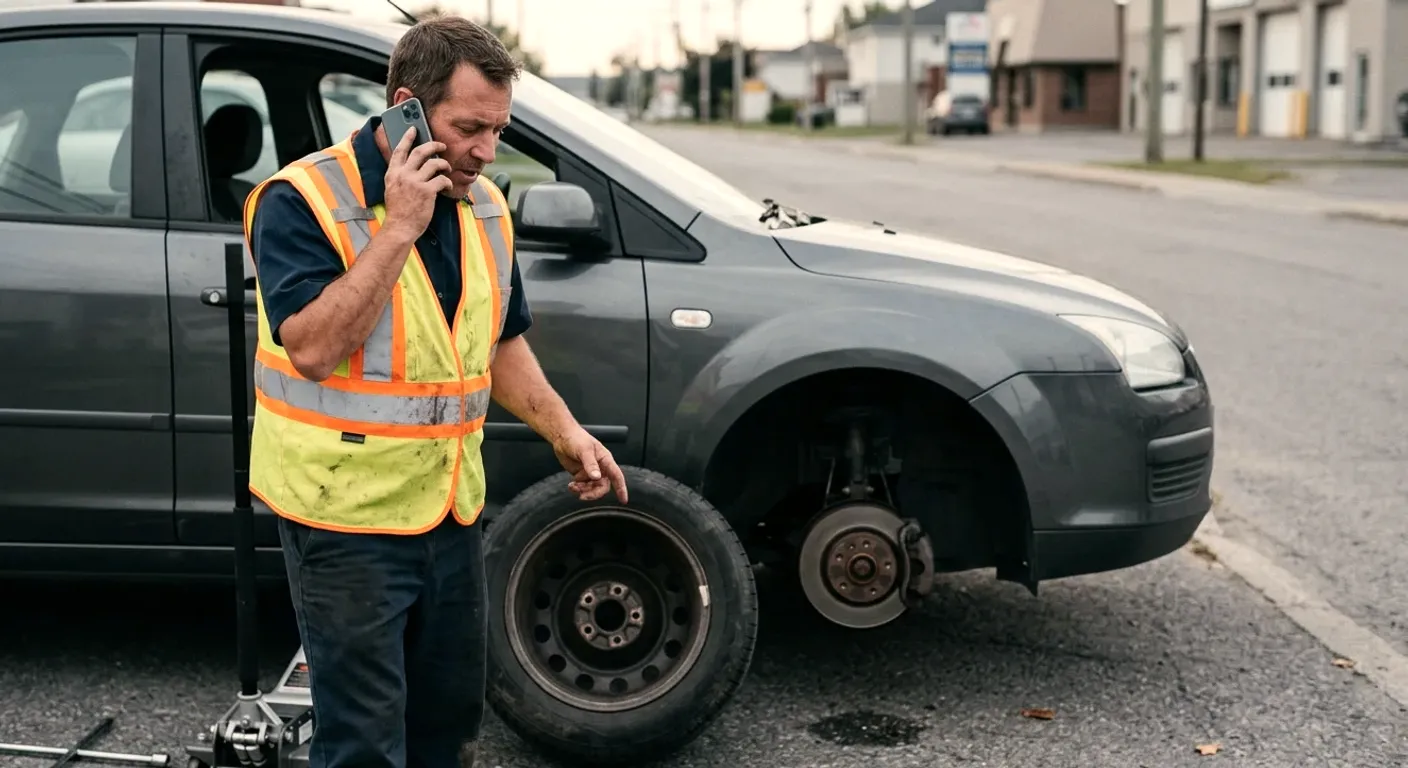
Describe exactly which wheels are missing
Start with an exact description of the car. Don’t simply say that it has no wheels. The operator needs to know what’s present at each corner.
Explain whether one wheel, two wheels, or all four are missing. Say whether the tires are flat, removed, or separated from the wheels. A flat tire and a missing wheel are different conditions. If a wheel is present but damaged, describe that too.
Tell the operator whether the car can roll, steer, or shift into neutral. If you can’t confirm something, say that plainly. Don’t force a stuck control or crawl beneath the vehicle to investigate.
Photographs can make the first conversation clearer. Take wide photos showing the entire car and its surroundings. Then photograph every missing-wheel position. Include visible damage near the suspension, body, and ground. Don’t enter traffic or another unsafe area for a better angle.
Also give the year, make, and model when known. Tell the operator whether it’s a car, pickup, SUV, van, electric vehicle, or another type. Mention any loose parts, open panels, or debris around it.
These details help the independent operator decide whether the vehicle can be handled. Quick Tow EP doesn’t make that decision and owns no recovery equipment. The operator you’re connected with evaluates the car, the site, and the requested move.
If you’re searching for someone to tow a car without wheels, accurate details matter more than a broad description. They can prevent a trip based on incomplete information.
Explain where the vehicle is sitting
The car’s exact position matters as much as its condition. Tell the operator whether it’s on pavement, gravel, dirt, concrete, or another surface. Describe whether the ground looks level, sloped, soft, washed out, or uneven.
A car beside a garage presents a different access problem than one beside I-10. The same applies to vehicles near Loop 375, US-54, or a Lower Valley property. Give the nearest street or clear location description, but don’t stand in traffic to collect details.
Say whether the car is in a driveway, garage, backyard, parking space, alley, storage area, or roadside location. If it’s inside a structure, describe the doorway and the space around the car. Mention walls, posts, fences, curbs, gates, parked vehicles, and overhead obstructions.
Ownership and permission also matter. Be ready to explain your connection to the vehicle and property. If the car belongs to someone else or sits on property you don’t control, resolve permission before arranging removal. The independent tow company can tell you what documentation it requires.
Location also determines which jurisdiction applies. El Paso proper, Horizon City, Socorro, and Sunland Park aren’t interchangeable. Sunland Park is in New Mexico, where Texas towing rules don’t apply. Horizon City and Socorro are in Texas but outside El Paso city limits.
If the vehicle is on Fort Bliss, installation rules apply. Don’t assume an off-post operator can enter or handle the situation. The operator must decide whether the requested location falls within the work it accepts.
When the car is blocking traffic or creating an immediate danger, contact the proper public authority. Don’t try to reposition a wheel-less vehicle yourself.
Share access and clearance details
Access can determine whether the operator accepts the removal. Walk the normal approach path only if it’s safe. Note each turn, gate, doorway, slope, and narrow point between the street and the car.
Give measurements when you can take them safely. Measure the narrowest gate or opening. Note the available height inside a garage or covered space. Describe the distance between the car and nearby walls, fences, landscaping, or other vehicles.
Don’t guess if you can’t measure safely. Send photos and tell the operator that the dimensions remain unconfirmed. The operator can decide what else is needed before accepting the work.
Mention whether the access route crosses loose soil, landscaping, a drainage area, or damaged pavement. El Paso’s July-to-September monsoon season can bring short, intense storms and flash flooding. Don’t enter moving water or ask an operator to assess a flooded site from an incomplete description.
Spring dust and wind can also reduce visibility around El Paso roads. If the vehicle is near an active roadway, keep yourself away from travel lanes. A roadside location requires a different assessment than a car sitting well inside private property.
Clear ordinary personal items from the approach when it’s safe. Don’t move structural objects, cut locks, remove gates, or alter someone else’s property. Tell the operator about every barrier instead.
For a vehicle in an apartment complex or managed lot, identify any entry controls. Explain whether there’s a gate, security desk, access code, or property manager. Don’t share private access information publicly. Give it directly to the operator after confirming who you’re speaking with.
Good access notes don’t guarantee removal. They give the independent operator enough information to make its own decision.
Ask what equipment the operator requires
Don’t assume every tow company handles cars without wheels. Ask directly whether the operator accepts the vehicle in its present condition. The answer may depend on the missing wheels, visible damage, surface, available space, and intended destination.
Quick Tow EP connects callers with independent, separately licensed local tow operators. We don’t own trucks or recovery gear. We also can’t select equipment or approve a loading plan. Those decisions belong to the operator assessing the job.
Before scheduling anything, ask what information the operator still needs. It may request more photos, measurements, ownership documents, or a clearer description of the vehicle’s condition. Follow its instructions without attempting repairs or moving the car yourself.
Ask whether you need to prepare the area. Confirm what can remain inside the vehicle. Mention locked doors, missing keys, steering problems, and any control that won’t move. Don’t claim the car rolls unless you’ve confirmed it safely.
You can also verify a Texas towing operator through the TDLR license search. Select the towing license type and search using the available operator details. Texas requires towing companies operating tow trucks over public roads to be licensed, subject to specific statutory exemptions.
If the first operator declines, that doesn’t prove the car can’t be removed. It only means that operator didn’t accept the described job. Give the next operator the same complete information so it can conduct its own assessment.
For a junk vehicle, our junk car removal referral page explains how Quick Tow EP connects callers with independent operators. The operator still decides whether it can handle the specific car and location.
Confirm the destination and payment
Know where the car should go before requesting removal. The destination might be a repair facility, private property, storage location, or scrap yard. Don’t assume any destination will accept a car without wheels.
Call the destination first. Confirm that it will accept the exact vehicle in its current condition. Ask where the operator should enter and where the vehicle may be placed. Get the name of the person or department that approved delivery.
If you want to tow a car to a scrap yard, ask what ownership documents that yard requires. The approved claims ledger doesn’t confirm one universal document list for every private destination. Each receiving business sets its own intake requirements, so verify them directly.
Tell the operator if the trip crosses a jurisdiction line. A move from El Paso into Sunland Park enters New Mexico. Texas fee rules don’t apply to a New Mexico tow. No verified New Mexico dollar figure is available here, so confirm the price directly with the operator.
A removal requested by the vehicle owner is a consent tow. The operator prices that job. Quick Tow EP sets no prices, quotes no totals, and collects no payment for the operator.
Before the vehicle is hooked up, ask the operator to explain the price and accepted payment method. Confirm who will pay and when payment is due. Ask whether the destination may add its own charges, then verify those charges with the receiving business.
Keep the operator’s contact details and any paperwork it provides. Make sure the destination information is correct before movement begins. A complete address, access instructions, and confirmed receiving contact can prevent confusion after the vehicle leaves its current location.
When to call us
A car without wheels needs an independent licensed operator when its condition or location requires professional towing assessment. Call (915) 615-5465 to request a referral to an independent, separately licensed local tow operator. Availability isn’t promised, and the operator must assess the car before deciding whether to accept the work. If nobody picks up, leave a voicemail.