A lowered car needs a more careful conversation before loading begins. Document the vehicle, describe its lowest areas, and explain anything preventing it from rolling or steering. The independent operator can then decide whether the car and both locations can be handled.
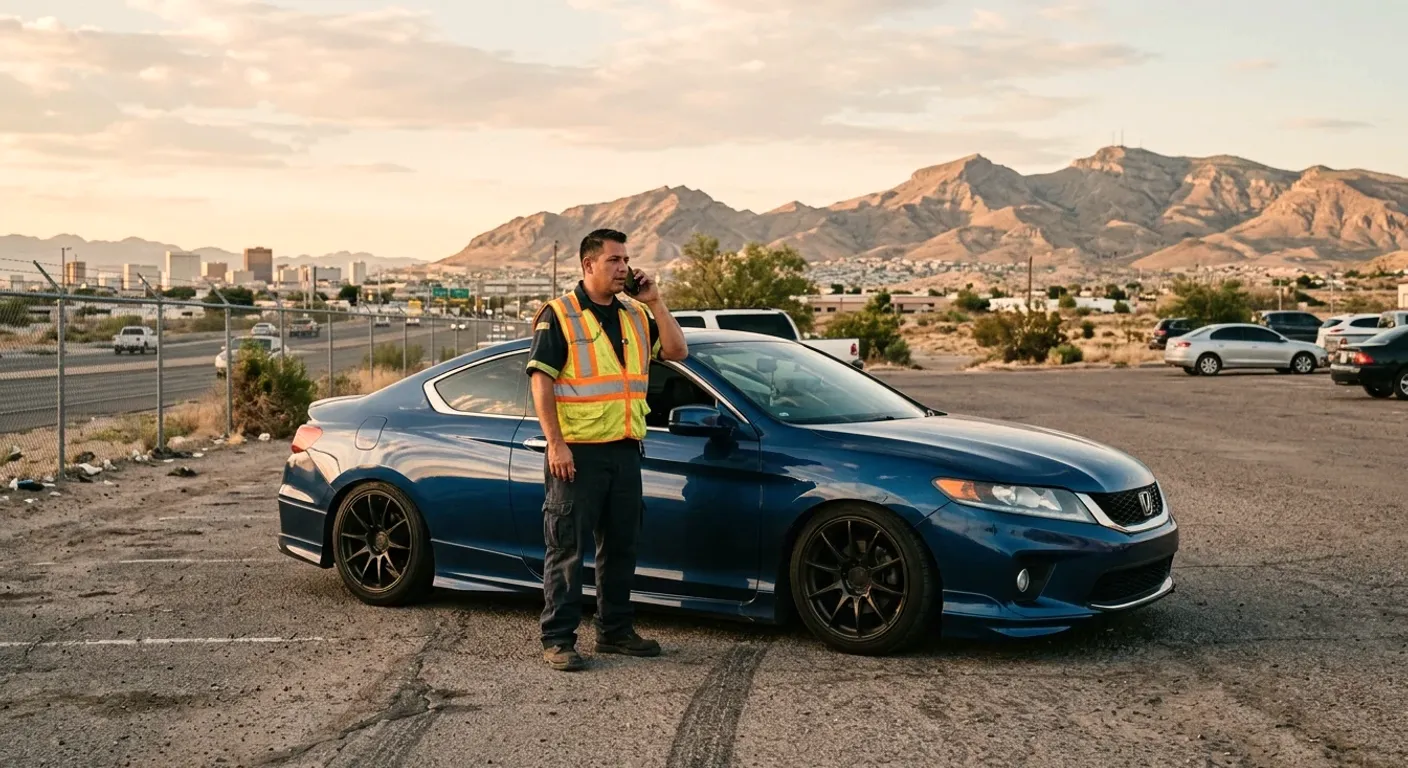
Document the car’s current condition
Start with clear photos before the operator arrives. Photograph all four sides, each wheel, and the areas closest to the ground. Include the front lip, side skirts, rear bumper, exhaust, and visible underbody parts.
Take wider photos showing where the car sits. A close-up may capture a scrape but miss the surrounding pavement. The wider view helps explain whether the car is on level ground, beside a curb, or sitting across a steep driveway.
Record existing chips, cracks, dents, loose trim, and hanging panels. Don’t rely on memory after the vehicle has moved. If a wheel, tire, or suspension part already looks damaged, photograph it from several useful angles.
A short video can capture details that still photos miss. Walk around the car slowly without claiming anything about the cause of existing damage. Save the original files and their timestamps.
Remove loose items from the cabin when you can access them. Secure removable exterior pieces yourself only when you already know their correct handling. Don’t pull, lift, or detach an unfamiliar part just to prepare for towing.
Accident damage changes the conversation. Tell the operator if bodywork touches a tire, a wheel sits at an unusual angle, or fluid appears beneath the car. Don’t attempt to diagnose the problem. Describe what you can see and let the operator assess the vehicle on scene.
This record doesn’t guarantee the car’s condition during transport. It creates a clear reference point for you and the independent tow company.
Describe its clearance to the operator
Say that the car is lowered during the first call. Don’t wait until the operator sees it. “Sedan” or “sports car” doesn’t explain how close its body sits to the pavement.
Describe how the car was lowered, if you know. Mention adjustable suspension, aftermarket bodywork, a front splitter, side skirts, or a low exhaust. If you don’t know the modification details, say that plainly.
You don’t need to guess a clearance measurement. A photo taken at pavement level may be more useful than an uncertain number. Include the front, rear, and both sides. Place a familiar object nearby only for visual context, without forcing anything beneath the car.
Identify the lowest visible point. Also tell the operator whether that point is loose, damaged, or normally sits that way. A low front lip creates a different access concern than a hanging exhaust or damaged suspension part.
If you’re asking about flatbed towing for a lowered car, describe the vehicle and location before requesting a specific method. A flatbed’s presence alone doesn’t settle whether loading is workable. The operator must evaluate the car, surface, access, and available equipment.
The same applies to exotic and classic car towing. Share the year, make, model, modifications, and current condition. Don’t assume a factory model name tells the operator how your particular car sits.
For low clearance car towing in El Paso, location matters too. A car beside I-10 presents a different setting from one inside a Westside garage. Give the operator a complete picture before anyone attempts to move it.
Share steering and wheel details
Tell the operator whether the car rolls, steers, and shifts. Don’t test those functions when doing so could worsen visible damage. Report what happened the last time you tried, then stop.
Say whether the steering wheel turns normally, feels locked, or can’t be checked. Mention whether the key is present and whether the vehicle starts. If it uses a push-button system or has an electronic parking brake, identify that without guessing how the system should be released.
Inspect the wheels from a safe standing position. Report flat tires, visibly bent wheels, missing wheel parts, or tires pressed against bodywork. A car that sits low because of a flat tire isn’t the same situation as an undamaged lowered car.
Tell the operator about unusual wheel fitment. Wide wheels, stretched tires, spacers, or bodywork close to the tire may affect the assessment. If you don’t know the terminology, send photos instead.
Point out any wheel that won’t rotate or appears out of line. After a collision, don’t straighten a wheel or force the steering. The operator needs the vehicle’s actual condition, not a temporary position created for the tow.
Also explain the drivetrain only when you know it accurately. Provide the model and trim so the operator can verify anything uncertain. Don’t guess whether the car is front-wheel drive, rear-wheel drive, or all-wheel drive.
Keep the key ready, but don’t leave it unattended inside the vehicle. If someone else will meet the operator, make sure that person knows where the key is and has authority to release the car.
These details help the independent operator evaluate the request. They don’t replace an on-scene inspection or establish a required towing method.
Confirm access at both locations
Give the exact pickup and destination before the tow is arranged. Include the business name, gate location, parking level, or unit number when relevant. A street address alone may not reveal a tight entrance or steep approach.
Photograph the path around the vehicle. Show nearby curbs, walls, parked cars, overhead structures, and turns through the lot. Tell the operator if the car is inside a garage, behind a locked gate, or blocked by another vehicle.
Mention whether the surface is level, sloped, soft, flooded, or covered with debris. Don’t move the lowered car merely to improve the photos. The operator should assess its current position.
El Paso geography can change the job’s setting quickly. Identify whether the car is near I-10, Loop 375, US-54, Mesa Street, Montana Avenue, or another named corridor. Give the direction of travel when the car is beside a divided road.
Be precise about jurisdiction. Sunland Park and Santa Teresa are in New Mexico, not El Paso. Horizon City and Socorro are outside El Paso city limits in Texas. Don’t describe every destination east of Downtown as “East El Paso.”
The destination needs the same review. Ask whether the repair shop, storage location, or residence can receive the car. Confirm where the vehicle may be placed and whether someone must open an entrance.
A narrow driveway or underground parking area may change what the operator can accept. Don’t promise access on someone else’s behalf. Send destination photos when the entrance or unloading area looks uncertain.
If either location changes, update the operator before hookup. The driver deals with and pays the independent operator directly, so confirm the destination and price with that operator before the vehicle is connected.
Review the proposed towing method
Ask the operator to explain the proposed approach after seeing the vehicle. The answer should reflect your car’s condition and the access at both locations. Don’t insist on a method based only on a general article or video.
If the plan involves a flatbed, ask how the operator will evaluate clearance during loading and unloading. If another towing method is proposed, ask why it fits this particular car. The independent operator decides whether the available equipment and location are suitable.
Point to every area that concerns you. That may include a front lip, rear diffuser, side skirt, exhaust, wheel, or damaged panel. Don’t crawl beneath a stranded car to inspect parts you can’t safely see.
Ask where the operator wants you to stand during the assessment. Don’t operate towing equipment, place loading materials, or direct the vehicle’s movement. Equipment setup belongs to the operator handling the job.
Before hookup, confirm the destination and the operator’s price directly. Quick Tow EP doesn’t set prices or quote totals. A tow requested by the vehicle owner is a consent tow, so the operator prices the job.
You can also verify a Texas tow operator through the TDLR license search. Texas has different towing operator license categories based on the work performed. Search using the operator’s identifying information when you need confirmation.
No towing method supports a damage-free promise. A careful review can identify concerns, but the operator must decide whether to proceed. If the car or location can’t be handled with the available setup, discuss the next practical option before anyone moves it.
Keep your condition photos, operator information, and payment record together. That gives you an organized record of what was discussed and what condition you documented.
When to call us
Call when a lowered car can’t move normally, has limited clearance, or needs an operator to assess the pickup and destination. Call us at (915) 615-5465 and we’ll connect you with an independent licensed operator who handles this work. If nobody picks up, leave a voicemail.