Searching for “tow junk car near me” usually means the vehicle needs to leave soon. Before arranging removal in El Paso, confirm your authority, paperwork, payment terms, destination, and the car’s actual condition. Those details help the independent operator plan for the vehicle that’s really waiting.
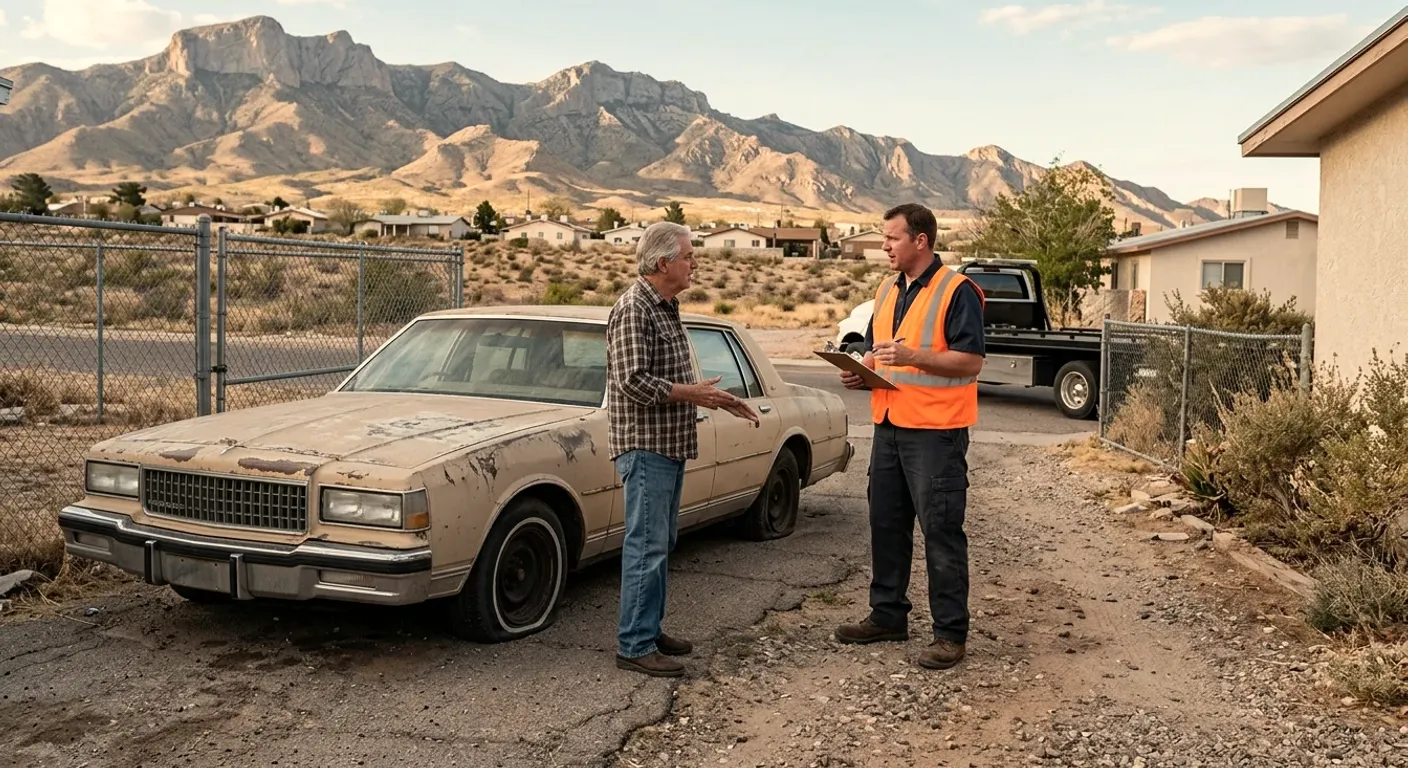
Confirm that you can authorize removal
Start by confirming that you have authority over the vehicle and its location. Being able to unlock a car doesn’t prove that you can sell or dispose of it.
Check whose name appears on the ownership documents. If another owner, business, estate, lender, or insurer has an interest, explain that before arranging removal. Don’t assume a tow operator or salvage yard can resolve an ownership dispute at pickup.
Requirements for selling a junk vehicle, transferring its title, handling a lien, or replacing missing documents couldn’t be confirmed from the approved towing sources for this page. Ask the proposed buyer what documents it requires. Then confirm those instructions with the Texas agency that issued the vehicle title. If the vehicle is titled in New Mexico, check with the corresponding New Mexico motor-vehicle authority instead.
Location permission matters too. A car in your own open driveway presents a different situation from one at an apartment, repair shop, storage facility, or commercial lot. Ask the property owner or manager whether removal access is approved. At a repair shop, settle any release issue directly with the facility before the operator arrives.
If police or another agency already had the car towed, you can’t treat it like a driveway pickup. The El Paso Police Department explains how to locate and recover vehicles on its vehicle towing page. Resolve the impound and ownership questions before arranging a separate trip to a scrap yard.
Quick Tow EP is a referral line, not the vehicle buyer. We connect callers with independent, separately licensed tow operators. The operator must still decide whether the requested move can be completed.
Gather the vehicle details and documents
Write down the basic vehicle information before calling. Include the year, make, model, body style, approximate mileage, color, and vehicle identification number. Check the car itself when possible instead of relying on memory.
Tell the operator where the car is located. An exact El Paso address is more useful than a neighborhood name. Mention whether it’s near I-10, Loop 375, US-54, Mesa Street, Alameda Avenue, or another major route. Those details help distinguish Central El Paso from the Northeast, Westside, Lower Valley, or Far East.
Jurisdiction also matters. El Paso proper, Socorro, Horizon City, and Sunland Park aren’t interchangeable. Sunland Park is in New Mexico, where Texas towing rules don’t apply. Socorro and Horizon City are in Texas but outside El Paso city limits. Give the full pickup address so the operator can identify the correct jurisdiction.
Have the keys ready if they exist. Gather the title, registration, lien-release paperwork, and a photo ID if available. These are sensible items to locate, but this page can’t confirm which documents a particular buyer or salvage yard will accept. Ask before scheduling the handoff, especially if the title is missing, damaged, unsigned, or held by someone else.
Don’t sign a blank title or other blank transfer form. Ask the buyer which fields must be completed, who will receive the vehicle, and when the ownership transfer occurs. If the instructions aren’t clear, confirm them with the issuing motor-vehicle authority.
Texas requires towing operators working over public roadways to hold the appropriate license for their work. You can check an operator through the TDLR license search. Select the towing license category and search using the operator’s available identifying information.
Describe missing wheels or major damage
“Doesn’t run” isn’t enough information for planning a junk-car tow. Describe what the vehicle can and can’t do.
Tell the operator whether the engine starts. Explain whether the transmission moves the car, the steering turns, the brakes release, and the wheels roll. Mention missing keys, locked steering, flat tires, seized brakes, broken suspension, collision damage, or a damaged axle.
Count the wheels and tires. If a wheel is missing, say which corner is affected. Don’t describe a car resting on blocks as simply having a flat tire. The loading problem is different, and the operator may need different equipment.
Also identify removed components. Mention a missing engine, transmission, catalytic converter, battery, doors, hood, or other major part. If a repair shop dismantled the vehicle, explain which parts remain nearby and which are gone. Don’t reinstall heavy components merely to make the car look complete.
Access can matter as much as damage. Tell the operator if the vehicle is:
- Inside a garage or behind a locked gate
- Blocked by another vehicle
- On loose dirt, gravel, or soft ground
- On a steep or narrow driveway
- Positioned against a wall or fence
- Missing room for a tow vehicle to approach
- Located at a shop with restricted access
El Paso conditions can change the setup. Dust and wind are common concerns during spring. Short, intense monsoon storms from July through September can leave soft ground or standing water. Don’t ask an operator to enter flooded ground or guess whether a washed-out surface will support towing equipment.
Photos may help the operator understand the position and damage. Send them only if requested. Include the whole vehicle, affected wheels, surrounding access, and any obstacle that could change loading.
Clear personal items from the car
Empty the vehicle before the handoff. Check more than the seats and glove box. Cars that have sat for months often become storage spaces without anyone noticing.
Look under each seat and inside the center console. Empty the trunk, door pockets, seatback pockets, spare-tire compartment, and any cargo-floor storage. Remove tools, documents, medication, electronics, garage remotes, toll devices, and sentimental items.
Check for personal information. Insurance cards, repair invoices, registration papers, mail, and old receipts can contain names or addresses. Keep the documents needed for the transaction separate from papers that should leave with you.
Remove accessories that aren’t part of the sale, if they can be taken out safely. Examples include phone mounts, child seats, portable chargers, removable audio equipment, and personal license-plate frames. Don’t remove a fixed vehicle component merely because it may have separate value. Ask the buyer first if a component affects the agreement.
Plate-handling requirements for an El Paso junk-vehicle transaction couldn’t be confirmed from the approved sources. Ask the motor-vehicle authority that issued the plate what to do with it. A Texas plate and a New Mexico plate may involve different instructions.
Make one final walk around the car. Check the roof, pickup bed, trailer hitch, and ground underneath. If you discover a fluid leak, damaged glass, sharp metal, or an unstable part, tell the operator. Don’t hide the condition or leave loose objects that could shift while the vehicle is loaded.
Keep the keys and transaction documents with you until the receiving party explains the handoff.
Confirm payment and destination details
Decide whether you’re paying for transportation or selling the vehicle. Those aren’t automatically the same transaction.
If you only need to tow a car to a scrap yard, confirm that the destination has agreed to receive it. Get the yard’s correct address and ask about its intake instructions. Confirm whether someone must meet the operator and whether the yard requires documents before accepting the vehicle.
Quick Tow EP doesn’t own a yard, buy vehicles, set prices, or quote totals. The independent operator sets the towing price, and you pay that operator directly. A tow requested by the vehicle owner is a consent tow, so the nonconsent towing cap tables don’t set its price. Confirm the operator’s price and the work included before the vehicle is hooked up.
If you’re searching for “tow junk car for cash,” separate the buyer’s offer from the towing charge. Ask who is buying the car, who is paying you, and whether the tow is included in that buyer’s agreement. Don’t assume removal is free or that payment is guaranteed.
No verified local figure supports a standard junk-car value. This page also couldn’t confirm any El Paso “$3000 rule” for cars. Ask the buyer how it reached its offer and what could change that amount. Get clear answers before releasing the keys or signing ownership documents.
Confirm these points directly:
- The legal name of the buyer or receiving yard
- The vehicle and address covered by the agreement
- Whether the buyer or owner pays the tow operator
- The payment method and payment timing
- The destination address
- The documents required at handoff
- What happens if the yard refuses the vehicle
- Whether missing parts or access problems change the arrangement
Keep copies of completed documents and any receipt you receive. Don’t rely on a verbal promise that conflicts with the paperwork. For more help arranging the move itself, review our junk car removal referral service.
When to call us
Call when an unwanted vehicle needs a licensed towing professional to move it from an El Paso property, shop, or parking area. Call us at (915) 615-5465 and we’ll connect you with an independent licensed operator who handles this work. If nobody picks up, leave a voicemail.