Searching for a “grúa flatbed” usually means you want to discuss a specific towing method. The operator still needs details about your carro, its wheels, and both locations. That short conversation helps the operator decide whether the requested method fits the job.
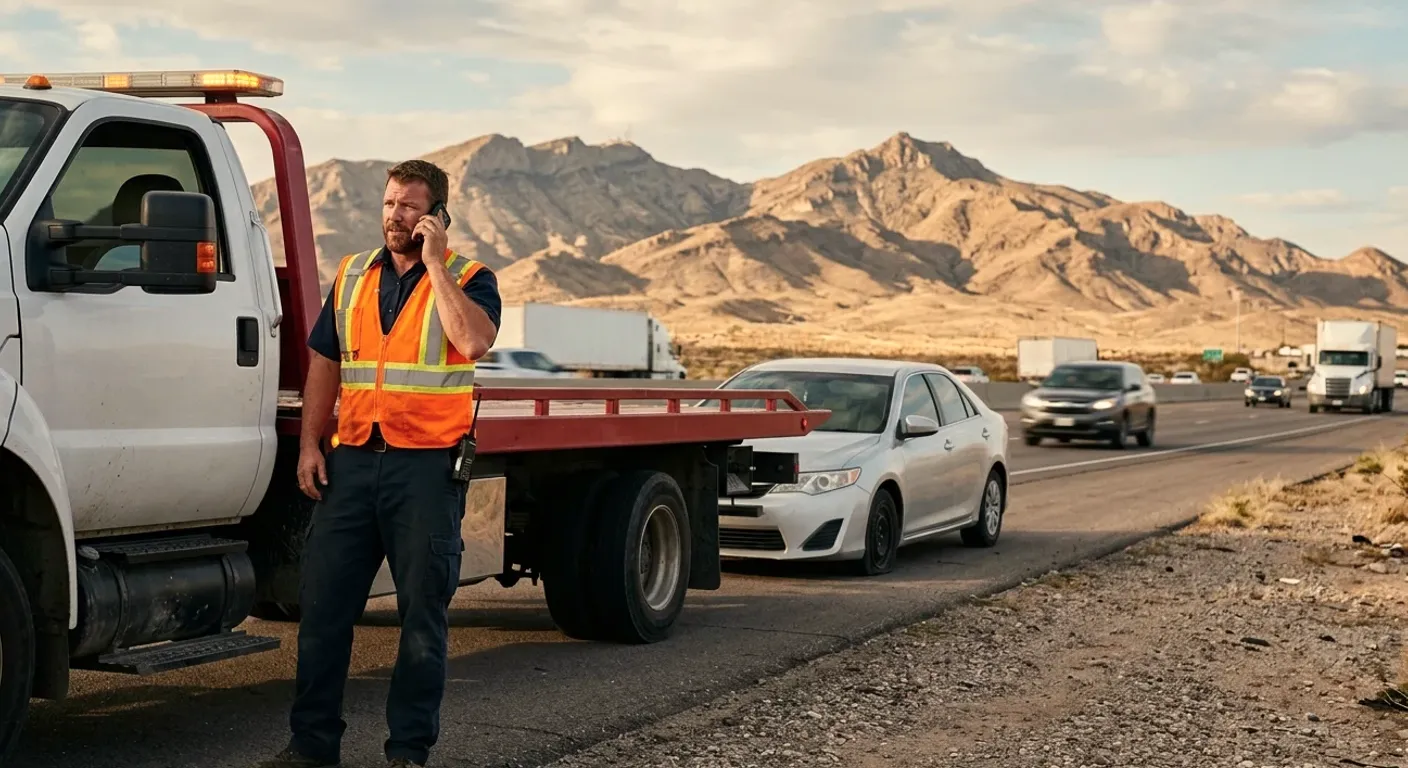
What grúa flatbed usually means
“Grúa flatbed” mixes the Spanish word for tow truck with an English equipment term. You’ll hear that kind of Spanglish throughout El Paso. Searchers may also type “grua flatbed” without the accent or use the plural “gruas flatbed.”
When you use the phrase, explain what you actually need. You may want the whole carro carried rather than pulled with wheels touching the road. You may also be asking because the vehicle has damage, locked wheels, or limited ground clearance. Don’t assume the phrase alone tells the operator everything.
Flatbed towing is also different from shopping for a commercial truck bed. Online results often discuss freight trucks, truck-body installations, or equipment sales. Those pages won’t answer whether a particular tow setup fits your disabled vehicle.
Quick Tow EP is a referral line. We connect callers with independent, separately licensed local tow operators. We don’t own flatbeds, choose equipment, or perform the tow. The operator you’re connected with decides what equipment can handle the specific vehicle and location.
No verified local source provides one universal flatbed capacity. That means there isn’t a responsible single answer to “How much weight can it carry?” Ask the operator whether the actual equipment is rated for your vehicle. Give the year, make, model, and vehicle type. Mention modifications, cargo, or anything else that may affect its size or weight.
You can also review our flatbed towing service guide before calling. Use it as a starting point, then confirm the towing method directly with the operator.
Describe the carro and its condition
Start with the vehicle, not the reason you prefer a flatbed. The operator needs a clear picture before discussing equipment. “It’s a broken car” leaves too much unanswered.
Give these details in plain language:
- The year, make, and model
- Whether it’s a carro, pickup, SUV, motorcycle, or another vehicle
- Whether it starts and stays running
- Whether it can shift into neutral
- Whether you have the keys
- Whether any wheel looks damaged or sits at an unusual angle
- Whether the front, rear, or side has visible crash damage
- Whether parts are touching the pavement
- Whether the vehicle has been modified or sits unusually low
- Whether it carries cargo that can’t be removed
Use whichever language feels natural. “La troca no prende” gives the operator more useful information than simply asking for gruas flatbed. You can continue in English, Spanish, or a mix while describing what you see.
Don’t diagnose damage you can’t confirm. Say, “The front wheel points inward,” instead of naming a broken component. Say, “I see fluid beneath the front,” rather than guessing which system is leaking. Observable details help without turning a roadside call into a mechanical diagnosis.
Location also changes the conversation. A damaged carro beside I-10 presents a different setting than one parked at a Lower Valley home. A vehicle near Mesa Street may have different access than one near a narrow section of North Loop Drive.
Tell the operator where the vehicle sits, which direction it faces, and what surrounds it. Mention a parking structure, gate, wall, soft ground, tight driveway, or blocked approach. The operator can then review whether the requested towing method works there.
Explain whether the wheels can roll
The condition of each wheel matters when you ask for a grúa flatbed. Tell the operator what happens when the vehicle is placed in neutral, if you already know. Don’t claim the wheels roll freely when you haven’t checked.
Report each visible problem separately. One tire may be flat while another wheel appears turned. A crash may have changed the position of only one corner. The parking brake may be engaged, or the keys may be unavailable. Those facts aren’t interchangeable.
A useful description sounds like this:
- “The front passenger tire is flat.”
- “The rear wheels moved before the engine stopped.”
- “The steering wheel is locked.”
- “The carro won’t shift into neutral.”
- “I don’t have the key.”
- “The front bumper is touching the ground.”
- “I can’t confirm whether the rear wheels will turn.”
That last answer is acceptable. It’s better than guessing.
Don’t promise yourself that every nonrolling vehicle needs the same solution. The approved local sources don’t establish equipment instructions for every vehicle condition. The independent operator must match the method to the actual carro and scene.
Mention drivetrain information if you know it from the vehicle documentation. If you don’t know, say so. Don’t choose a towing method from an online rule that may not match your model. Ask the operator to review the vehicle information before hookup.
El Paso weather can also affect what you observe. Summer highs normally run in the mid-to-upper 90s. Heat shortens battery life. Monsoon storms from July through September can bring flash flooding, while spring dust and wind can reduce visibility. Describe the present conditions without guessing how they affected the vehicle.
Confirm the pickup and destination
Give an exact pickup point and a clear destination. “East El Paso” covers too much ground. Name the street, nearby intersection, business entrance, or highway direction. Avoid relying on a landmark the operator may interpret differently.
El Paso’s road network crosses several distinct areas. A pickup near US-54 in the Northeast isn’t the same run as one near Loop 375 in the Lower Valley. Mesa Street serves the Westside, while Montana Avenue and Horizon Boulevard lead toward communities east of the city. North Loop Drive is also FM 76 and continues through or near Socorro and Clint toward Fabens.
State lines and city limits matter too. Sunland Park and Santa Teresa are in New Mexico. Texas towing rules and El Paso city fee caps don’t apply there. No verified New Mexico tow figure is available in the approved local sources, so ask the operator which rules and charges apply.
If you called for the tow yourself, it’s generally a consent tow. The El Paso nonconsent fee table doesn’t set the price for that call. The independent operator prices the job, and Quick Tow EP doesn’t set prices or quote totals. Confirm the price directly with the operator before the truck hooks up.
Ask whether distance, vehicle condition, pickup access, and destination affect the operator’s price. Don’t expect a universal “flatbed rate.” No verified local source supports one.
Confirm that the destination can receive the vehicle. Give the operator the complete address and any access information you already have. If you haven’t chosen a destination, say that during the call. Don’t let “take it somewhere nearby” remain unresolved before the tow begins.
Review the towing method with the operator
Before hookup, ask the operator to repeat the proposed method. This is the moment to resolve assumptions created by the phrase “grúa flatbed.” Make sure both of you are discussing the same vehicle, pickup point, and destination.
You can ask:
- Will the requested method work with the vehicle’s present condition?
- Does the actual equipment fit this vehicle’s size and weight?
- How will the operator address wheels that don’t roll?
- Does the pickup area allow the proposed setup?
- What information is still missing?
- What price applies to this consent tow?
- Are there separate charges you should discuss before hookup?
The approved claims ledger doesn’t provide a universal flatbed weight limit, truck dimension, loading angle, or equipment specification. Those figures vary by the actual equipment, and they couldn’t be confirmed for this page. Ask the operator about the specific truck being used rather than relying on a generic online number.
You can verify a Texas towing operator through the TDLR license search. Select “Tow Truck Operators,” then search by the operator’s name, license number, city, county, or ZIP code. Texas has separate operator-license categories for incident management, private property, and consent towing.
Keep jurisdiction in mind during cross-border trips. El Paso city rules apply inside El Paso city limits. Statewide Texas rules may apply outside those limits, subject to lower local limits. New Mexico has its own Motor Vehicle Code and regulations. Ask which jurisdiction governs the pickup, especially near Sunland Park, Anthony, or the Texas-New Mexico line.
Finally, ask the operator for an arrival estimate. Quick Tow EP doesn’t promise arrival times, and the line may go to voicemail. Rural or distant pickups can also take longer than central locations.
When to call us
Call when your carro can’t be moved normally, has damaged wheels, or may need flatbed towing reviewed by a licensed towing professional. Have the vehicle details, wheel condition, pickup point, and destination ready.
Call us at (915) 615-5465 and we’ll connect you with an independent licensed operator who handles this work. If nobody picks up, leave a voicemail.