A flat tire in Far East El Paso leaves you with two choices. The tire may need roadside help, or the vehicle may need towing. Before calling, identify your location, inspect the visible damage from a safe position, and check whether the vehicle has a usable spare.
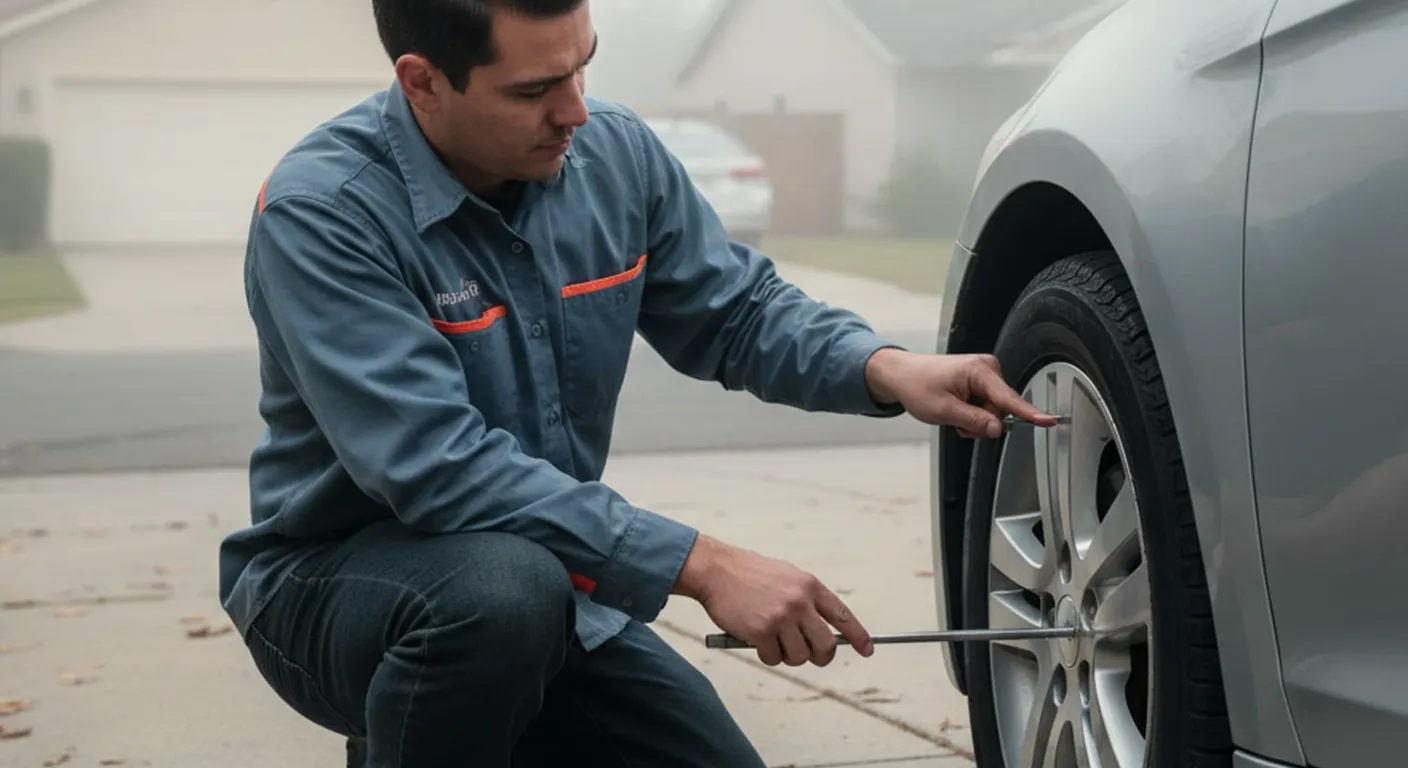
Share your exact location and direction
Start with the road name and your direction of travel. Far East El Paso includes busy corridors such as I-10, Loop 375 on Joe Battle, Montana Avenue, and Horizon Boulevard. Giving only “Far East” leaves too much ground to search.
On I-10, share the nearest exit or visible mile marker. Say whether you’re traveling east or west. On Loop 375, include your direction and the nearest crossing road. A nearby business can help, but the road and direction matter more.
If you’re in a shopping center or apartment complex, provide its name and entrance. Add the row, building, gate, or parking-lot landmark. If an entrance requires a code or staff approval, mention that before an operator starts toward you.
A phone location pin can help confirm your position. Check the pin before sharing it. Mapping apps sometimes place a vehicle on a frontage road instead of the main lanes.
Jurisdiction matters near the eastern edge of the city. Far East El Paso inside city limits follows El Paso rules. Horizon City, Socorro, Sparks, and Montana Vista are outside El Paso city limits. New Mexico communities follow different laws entirely. Tell the operator which community appears on your map if you’re unsure.
Your position relative to traffic also matters. Say whether the vehicle is in a parking lot, on a shoulder, or blocking a travel lane. Don’t step into moving traffic to collect a street name. Share what you can see from a protected position.
Describe the tire and wheel condition
The person answering needs more than “I have a flat.” Describe what you can see without crawling under the vehicle or standing near traffic. These details help the independent operator understand whether roadside tire help might fit the situation.
Start with the tire’s location. Say front or rear, then driver or passenger side. If more than one tire looks damaged, say so immediately. A vehicle with two damaged tires presents a different decision than one flat with a usable spare.
Next, describe the visible condition. Useful observations include:
- The tire is low but still seated on the wheel.
- The tire looks completely deflated.
- The sidewall has a cut, bulge, or torn section.
- The tire has separated from the wheel.
- The wheel appears bent or cracked.
- The vehicle struck a curb, pothole, or road debris.
- Another part of the vehicle appears to touch the ground.
Don’t remove an object from the tread before speaking with the operator. Don’t claim the tire can be repaired based only on a visible nail or screw. A tire professional must assess the damage.
Mention any dashboard warning, unusual sound, or steering change that appeared before you stopped. If you drove after the tire lost pressure, share that too. It helps the operator understand the possible wheel and tire condition without promising a diagnosis.
El Paso’s weather can add context. Summer high temperatures normally run in the mid-to-upper 90s. Spring dust and wind can reduce visibility, while July through September can bring short, intense storms. Tell the operator if visibility, standing water, or roadside conditions limit safe access to the vehicle.
Confirm whether a usable spare is present
A spare tire changes the decision only when it’s present, accessible, and suitable for the vehicle. Check the usual storage area if you can reach it safely. Depending on the vehicle, that may be under the cargo floor, beneath the body, or attached to the rear.
Tell the operator whether you found a full-size spare, a smaller temporary spare, or no spare. If you’re uncertain, describe what you see. Don’t assume a tire-inflation kit is a spare tire.
Look for obvious problems without attempting a repair. A spare that appears flat, cracked, damaged, or missing its valve cap should be reported. If the wheel doesn’t appear to match the vehicle, say that as well. The operator can decide what information is needed next.
Also check whether the vehicle has its jack and wheel-removal tools. Some vehicles use locking wheel nuts that require a matching key. Tell the operator if that key is missing or if you don’t know where it is.
Cargo can affect access. If luggage, tools, groceries, or mobility equipment covers the spare compartment, explain that before help arrives. Don’t unload belongings beside moving traffic just to reach the tire.
The vehicle itself matters too. Share the year, make, model, and whether it’s an electric vehicle, pickup, SUV, van, or car. Mention aftermarket wheels or unusually low clearance. These details don’t guarantee that a roadside change is possible, but they help the operator evaluate the request.
Choose roadside help or a tow
Roadside help may make sense when there’s one flat, a usable spare, and safe access around the affected wheel. Availability isn’t guaranteed, and Quick Tow EP can’t promise that an operator will change or repair a tire. Describe the situation first, then ask what the independent operator can handle.
A tow may be the better request when there’s no usable spare. The same applies when multiple tires are damaged, the wheel appears bent, or the tire has come off the rim. Damage after a curb or pothole strike may also require transport instead of a roadside tire change.
The destination is your choice. Have the tire shop, repair facility, home, or another lawful destination ready before calling. Confirm that the destination can receive the vehicle. Quick Tow EP doesn’t select a shop or guarantee that one is open.
For more detail about referral options, see Flat Tire Help and Roadside Assistance. These pages explain the types of requests you can describe when calling. The connected operator decides whether the job fits its equipment and current availability.
The TxDOT El Paso HERO program is another option on covered highway segments. Its coverage includes I-10 through Horizon Boulevard and portions of Loop 375. HERO can provide a flat-tire change or air at no charge, but it isn’t a tow to a shop. Check TxDOT’s current program information to confirm coverage and operating hours.
If a tow truck stops with the required visual signals, Texas law requires approaching drivers to change lanes when the road has at least two lanes in that direction, or reduce speed as specified by Transportation Code 545.157. That rule protects stopped tow operators and stranded drivers.
Review charges with the independent operator
A flat-tire tow requested by the driver is a consent tow. The El Paso nonconsent tow cap table doesn’t set its price. The independent operator prices the job, and you’ll deal with and pay that operator directly.
Before the vehicle is hooked up, ask what service the operator proposes. Confirm whether the request is for roadside tire help or a tow. If it’s a tow, provide the exact pickup point, destination, vehicle type, and visible condition.
Ask the operator to explain the expected charges. Check whether the amount discussed covers the full route and the equipment described. If the destination changes, ask how that affects the charge before approving the change. Quick Tow EP doesn’t set prices, quote totals, or collect the operator’s payment.
You can also verify a Texas towing license through the TDLR license search. Select the towing license type and search using the operator or company details provided to you.
Don’t confuse a driver-requested tow with a police-ordered or private-property tow. Inside El Paso city limits, City Code Chapter 12.54 governs nonconsent towing fees. Different rules apply outside the city limits in Texas. Texas towing rules don’t apply across the New Mexico state line.
If the vehicle has already been removed without your consent, ask which agency authorized the tow and where the vehicle was taken. That’s a different process from arranging flat tire towing in Far East El Paso.
When to call us
Call when there’s no usable spare, the wheel appears damaged, or the vehicle needs transport instead of a roadside tire change. Call us at (915) 615-5465 and we’ll connect you with an independent licensed operator who handles this work. If nobody picks up, leave a voicemail.