If your car is missing in El Paso, first identify who ordered or arranged the tow. For a police-ordered tow, check the EPPD vehicle-towing page and the city storage database before driving anywhere. A private-property or voluntary tow follows a different trail.
Start with who ordered the tow
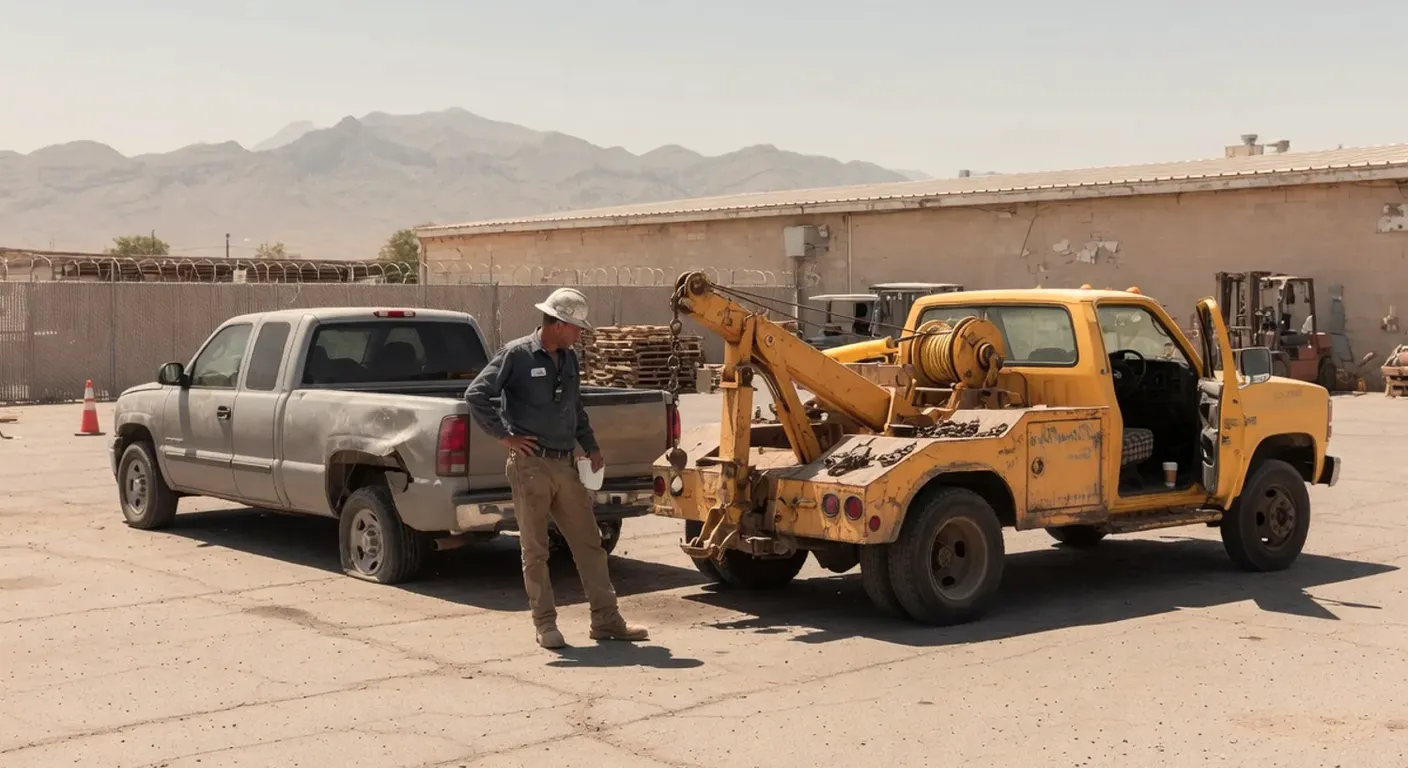
A car impound in El Paso, TX, usually starts with one question: who authorized the tow? The answer determines which agency, company, or storage facility has the useful records.
For a police-ordered tow inside El Paso, begin with the El Paso Police Department vehicle-towing page. EPPD may order a tow when a vehicle is parked illegally, appears abandoned, or can’t be driven safely after a crash. A tow may also follow an arrest, an unlicensed driver, or expired registration.
The City of El Paso Municipal Vehicle Storage Facility is operated for the city by UR Vehicle Management Solutions. Its address is 11615 Railroad Drive, El Paso, Texas 79934. The city’s towing page directs owners to the online vehicle database. That database lists stored vehicles and their current charges.
A private-property tow takes a different route. Start with the apartment office, store, property manager, or other person responsible for the location. Ask who authorized the removal, which tow company handled it, and where the vehicle was taken. Don’t assume a private-property tow went to the municipal facility. Our guide to private-property towing explains how that service differs from a tow requested by a driver.
For a voluntary tow, check your receipt, text messages, or call history. Contact the person who requested the tow if someone else arranged it. The destination may be a repair shop, home, dealership, or storage facility rather than an impound lot.
Quick Tow EP doesn’t operate an impound yard. We connect drivers with independent towing operators for new towing needs.
Gather the details needed to locate your car
Collect the identifying details before starting a tow car lookup. A storage facility needs enough information to separate your car from similar vehicles.
Have these details ready:
- The license plate and issuing state
- The vehicle identification number, if available
- The year, make, model, and color
- The location where you last left the vehicle
- The approximate date when it disappeared
- The name of the person who was driving
- Any police, parking, or property notices you received
Don’t rely only on the color or model. A license plate or vehicle identification number gives the yard a stronger match. Registration papers, an insurance card, or a photo of the vehicle may contain what you need.
The municipal facility requires a federal or state photo ID plus proof connected to the vehicle. Accepted documents include registration, title, insurance, a power of attorney, a court order, or a rental agreement. If you aren’t the owner, contact the facility before leaving home. Ask which documents apply to your situation.
Texas storage facilities also accept several forms of ownership proof. These include an insurance card, title, qualifying identification tied to registration, a notarized power of attorney, a tax collector’s receipt, or a lease or rental agreement. The TDLR towing consumer page explains statewide retrieval requirements.
If the ownership documents are locked inside the car, tell the facility. Texas rules allow free access to retrieve ownership documents and personal property from a stored vehicle. You don’t have to pay towing or storage charges merely to collect those items.
Confirm the yard before leaving home
Finding a possible record isn’t the same as confirming the car’s location. Call or use the facility’s official lookup system before driving across El Paso.
For an El Paso police impound, use the city storage database linked from EPPD’s towing page. Confirm the license plate, vehicle description, and storage location. Ask whether the vehicle has a hold. Some stored vehicles can’t be released until that hold is addressed.
Also confirm which documents and payment methods the facility will accept. The municipal facility accepts cash, Discover, Mastercard, and Visa. Card payments carry a 1.98% government fee. Charges quoted through the city system are valid only through midnight on the day quoted, so check again if you can’t retrieve the vehicle that day.
Bring your photo ID and vehicle paperwork. A non-owner should confirm the required authorization first. That step can prevent a wasted drive to Railroad Drive from the Westside, Lower Valley, or Far East El Paso.
Location matters across the metro. A vehicle removed inside El Paso may follow city procedures. A Sheriff-ordered tow in unincorporated El Paso County may be at a contracted lot or the EPCSO lot at 12501 Montana Avenue, Building F. Recovery through the Sheriff’s Evidence and Abandoned Motor Vehicle Section is by appointment.
Sunland Park and Santa Teresa are in New Mexico, not El Paso. Texas impound procedures and Texas fee rules don’t carry across the state line. Contact the New Mexico agency or storage facility that handled the tow.
If the vehicle hasn’t been impounded and instead needs a new tow from I-10, Loop 375, or US-54, emergency towing is a separate service.
Check the jurisdiction before discussing fees
The tow location controls which fee rules apply. Don’t use a statewide Texas figure without first checking whether the vehicle was removed inside El Paso city limits.
Inside El Paso city limits, City Code Chapter 12.54 caps nonconsent towing charges. The maximum tow charge is $100 for light-duty vehicles, $350 for medium-duty vehicles, and $450 for heavy-duty vehicles. These limits cover police-ordered, incident-management, and private-property tows inside the city.
The code permits up to $25 more for dollies or go-jacks. For vehicles over 10,000 pounds, it permits up to $55 per hour for each hour beyond two hours at the scene. Actual costs may also apply when cargo must be moved by hand.
If the owner reaches the scene before the vehicle is hooked up, the city code allows no tow charge. If it’s hooked up but hasn’t been removed, the release charge is one-half of the applicable city tow fee.
City Code Chapter 12.54 also provides an extra $20 fee when a vehicle is released after a police-ordered tow. That money is remitted to the police department. A vehicle taken to the city-owned storage facility has a $20 impoundment fee before release.
Storage charges are separate from the towing charge. Texas currently allows daily vehicle-storage rates of $22.85 for vehicles measuring 25 feet or less and $39.99 for vehicles longer than 25 feet. A facility can’t charge multiple storage days when it held the vehicle for less than 12 hours.
Different rules apply outside El Paso city limits in Texas. Socorro, Horizon City, Canutillo, Clint, Fabens, and unincorporated county areas don’t use El Paso City Code Chapter 12.54. State caps apply there unless the city or county has set lower limits.
No Texas fee figure applies to a tow in Sunland Park, Santa Teresa, Chaparral, or Anthony, New Mexico. Ask the responsible New Mexico agency or lot for the current charges.
What to do if the tow information isn’t confirmed
Don’t pay or travel based on an unconfirmed address, social-media post, or third-party phone listing. Work backward from the place where the car disappeared.
If police handled the incident inside El Paso, use EPPD’s official towing page and the city vehicle database. If the car vanished from an apartment, store, or commercial lot, contact the property representative. Ask for the tow company, authorization details, storage location, and the vehicle record.
For a vehicle removed in unincorporated El Paso County, contact the Sheriff’s Evidence and Abandoned Motor Vehicle Section. Its public office is at 3850 Justice Street in El Paso. Ask whether the vehicle is at the Sheriff’s contracted tow lot or the EPCSO lot on Montana Avenue. Don’t drive to either location until the office confirms the recovery appointment and required documents.
A Fort Bliss vehicle may follow installation rules. Those procedures aren’t confirmed here. Contact the appropriate Fort Bliss office rather than applying city or county instructions to a vehicle on post.
If the car disappeared across the New Mexico line, contact the agency or lot that handled the tow. New Mexico Motor Vehicle Code and state rules govern those locations. El Paso’s city caps and Texas TDLR caps don’t apply.
Write down who you spoke with, the date, the stated location, and any hold mentioned. Save screenshots of database results and keep every receipt. If you believe a Texas nonconsent tow lacked probable cause, state law provides a tow hearing process. The request must be filed within 14 days, excluding weekends and holidays, after the vehicle entered storage. A TDLR complaint doesn’t replace that hearing request.
If you still can’t confirm the vehicle’s location, return to the authorizing agency or property representative. Ask them to verify the tow company and destination from their own record.
When to call us
Call when your vehicle isn’t impounded but needs a licensed towing operator for a new move, breakdown, or recovery. Quick Tow EP doesn’t retrieve cars from yards or control vehicle releases.
Call us at (915) 615-5465 and we’ll connect you with an independent licensed operator who handles this work. If nobody picks up, leave a voicemail.