An EV that won’t shift into neutral needs careful planning before anyone moves it. Give the towing operator exact vehicle details, describe what still works, and check the current owner’s manual. This page can’t confirm a neutral procedure or online bypass for every model.
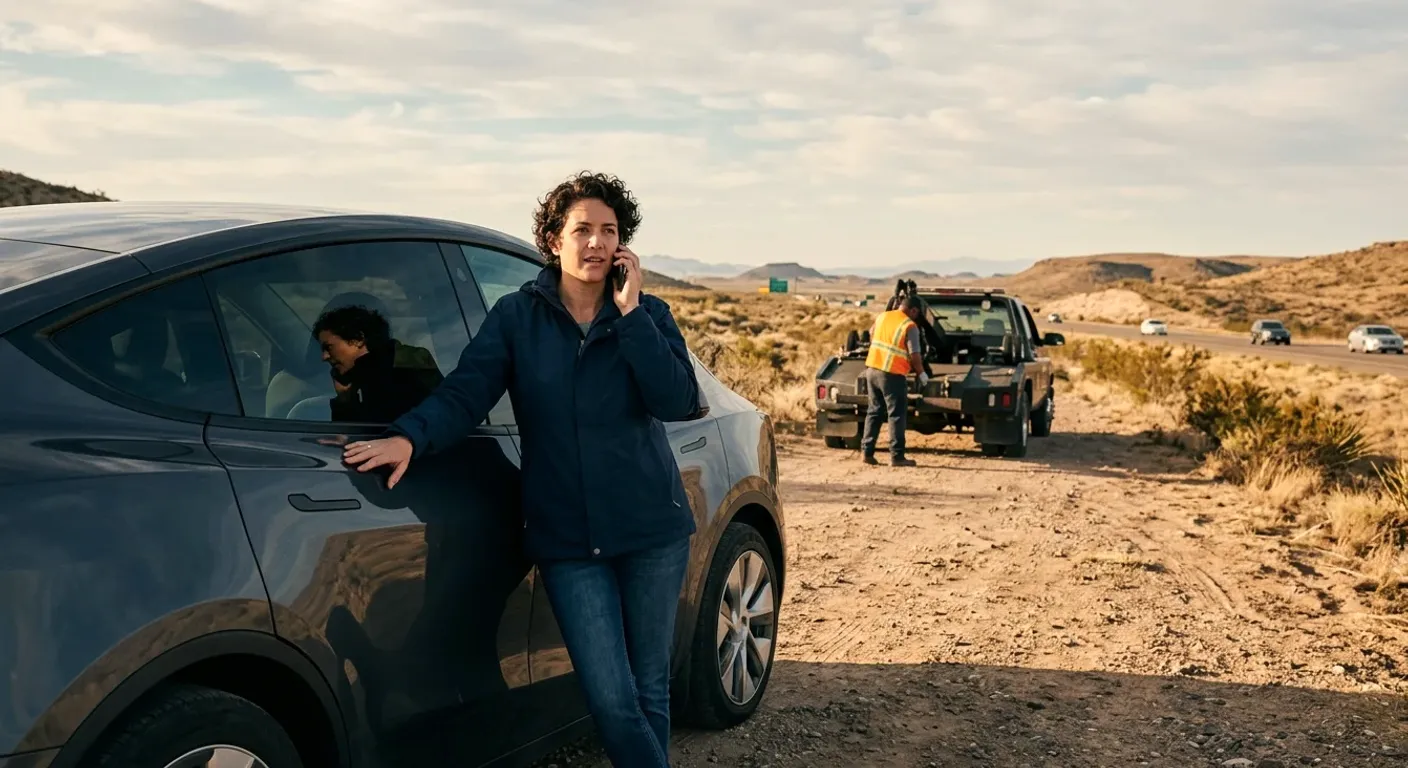
Identify the exact EV model and year
Start with the full year, make, model, and trim. Read those details from the registration, insurance card, vehicle app, or owner’s manual. Don’t guess based on the badge or body style.
Tell the operator whether the vehicle is fully electric or a plug-in hybrid. If you know whether it’s all-wheel drive, share that too. Don’t assume two vehicles from the same manufacturer use identical towing procedures. The model year and trim can matter when the operator reviews the correct method.
Also explain where the EV is sitting. A vehicle stuck inside a garage presents a different access problem than one parked beside I-10. Mention low ceilings, tight corners, locked gates, parking stops, slopes, and nearby vehicles. If the car is on Loop 375, US-54, or another highway, describe whether it’s in a travel lane or off the road.
Location also determines the jurisdiction. El Paso city limits, unincorporated El Paso County, and the New Mexico side follow different towing rules. Be precise if you’re near Sunland Park, Santa Teresa, Horizon City, Socorro, or Anthony. Don’t identify the state from a mailing address alone when you’re close to the line.
Have the vehicle identification number available if the operator requests it. You can usually find it on the registration or insurance documents. If you can’t read it from your current position, tell the operator it isn’t confirmed.
Quick Tow EP is a referral line, not a tow company. We connect callers with independent, separately licensed local operators. The driver deals with and pays that operator directly.
Describe the battery and display condition
Next, explain what happened before the EV stayed in park. Keep the account short and chronological. The operator needs observations, not a diagnosis.
Say whether the main display turns on. Read any visible warning exactly as written. If several warnings appear, take clear photos rather than relying on memory. Don’t clear alerts merely to make the screen look normal.
Describe what happens when you press the start control or select a gear. Does the display remain dark, show park, or display another message? Mention whether the key, card, or phone access still works. If an app shows a vehicle status, report the wording without interpreting it.
Tell the operator about the battery condition shown by the vehicle. Make clear whether you’re describing the main driving battery, another battery indicator, or an uncertain reading. If the display won’t turn on, simply say the battery status can’t be confirmed.
Report recent events that may matter. These include a collision, standing water, visible damage, smoke, unusual heat, or a charging interruption. This page can’t confirm whether damaged components can be handled or repaired. Tell the operator what you can observe.
El Paso conditions can complicate the moment. Monsoon storms from July through September can bring flash flooding. Spring dust and wind can reduce visibility on I-10. If weather or traffic makes the location unsafe, state that immediately when requesting help.
A dead display doesn’t confirm why the EV won’t shift into neutral. Neither does a warning message by itself. Leave the diagnosis to the vehicle manufacturer, a qualified repair provider, or the towing operator reviewing the job.
Explain what the wheels can still do
Describe the vehicle’s position before discussing movement. Say whether all four wheels are on pavement, one wheel is against a curb, or the vehicle is partly off the road. Mention parking stops, soft ground, standing water, collision debris, and any visible wheel damage.
This page can’t confirm a safe way to test wheel movement, access the underside, or pull the EV with another vehicle. This guide isn’t a procedure for releasing park, overriding controls, or moving locked wheels.
Instead, report only what you’ve already observed. Tell the operator whether the steering wheel turns normally or appears locked. Explain whether the parking brake indicator is on, off, or unavailable because the display is dark. If the vehicle moved before stopping, describe how it behaved without repeating the test.
Be precise about access around each side. An operator needs to know if a wall blocks the front, another car blocks the rear, or a narrow garage limits the approach. Measure nothing if doing so would place you near traffic.
Photos can make the description clearer. From a safe position, capture the whole vehicle, the space ahead and behind it, each wheel, and the dashboard warning. Avoid photos that expose private documents or unrelated people.
Don’t decide which towing method or equipment will work based on a forum post. Ask the independent operator to compare the location, wheel condition, and owner’s manual guidance. Our Tesla and EV towing page explains how to request help without implying that every EV uses one method.
If you’re stopped within the TxDOT El Paso HERO coverage area during its operating hours, the TxDOT HERO program can help move stranded vehicles out of travel lanes or off shoulders. HERO isn’t a tow to a repair shop.
Check the current owner’s manual
Use the owner’s manual for the exact model and year. Look for the sections covering towing, roadside assistance, vehicle transport, transport mode, neutral, or a disabled vehicle. A printed manual, the manufacturer’s official app, or the manufacturer’s official website may help you locate the correct section.
Check that the document matches your vehicle. A search result can lead to a manual for another model year, market, or trim. Don’t treat a video, forum comment, or short social post as the vehicle’s official procedure.
Read the relevant section before touching any control. If the manual gives a procedure, follow its limits and warnings exactly. If it says a step requires trained personnel or specific equipment, stop there and tell the operator. Don’t improvise around a missing tool, dark display, damaged control, or step that doesn’t match your vehicle.
If you can’t find clear instructions, say that. “I couldn’t confirm the towing procedure in the current manual” is useful information. It tells the operator that no verified method has been established yet.
Share the manual section title, page, link, or screenshot with the operator. Read the wording rather than summarizing it from memory. If the vehicle screen gives instructions that differ from an old document, report both and let the appropriate professional resolve the conflict.
The manual check matters most when an EV won’t shift into neutral. The goal isn’t to make the vehicle move at any cost. The goal is to give the operator model-specific information before the operator chooses a method.
This page can’t confirm a hidden menu, manual release, electrical connection, or control bypass for every EV. Check the current official instructions for that exact vehicle and share them with the operator.
Review the method with the operator
Before the operator begins, review the situation together. Repeat the year, make, model, trim, location, display condition, and observed wheel behavior. Show the manual section and dashboard photos you collected.
Ask what method the operator proposes for this vehicle and location. Confirm how locked wheels, limited access, curbs, or a slope affect that plan. If the explanation conflicts with the current owner’s manual, pause and ask the operator to review the discrepancy.
Don’t request that the operator force the vehicle into neutral. Don’t approve dragging or another improvised approach merely because the parking area needs to be cleared. The operator should evaluate the vehicle, site, and manufacturer guidance before movement begins.
Discuss the destination before hookup. Give the exact repair facility, dealership, home, or other approved location. Confirm that the destination can receive the vehicle. Quick Tow EP doesn’t run a yard or impound lot.
This driver-requested move is a consent tow. The operator sets the price. Ask the operator to explain the proposed charges before the truck hooks up. Quick Tow EP doesn’t set prices or quote totals.
Texas requires towing operators and towing companies to hold licenses based on the work performed. You can check a Texas operator through the TDLR license search. The operator you’re connected with is independent and separately licensed.
If the vehicle is across the state line in Sunland Park, Santa Teresa, Chaparral, or Anthony, New Mexico rules apply. Texas towing rules don’t carry across that line. No New Mexico tow price can be confirmed here, so ask the operator who sets the charge and what applies at that location.
Keep the keys, access card, phone, and manual ready. Remove only the personal items you can reach safely. Then let the operator review the vehicle before work starts.
When to call us
Call when your EV remains in park and the current manual doesn’t provide a safe, workable next step. Licensed towing help is also appropriate when locked wheels, road position, damage, or limited access complicates the move.
Call us at (915) 615-5465 and we’ll connect you with an independent licensed operator who handles this work. If nobody picks up, leave a voicemail.