Moving a classic car from West El Paso takes more preparation than sharing an address. The operator needs accurate details about the car, its condition, and the space around it before deciding how to move it.
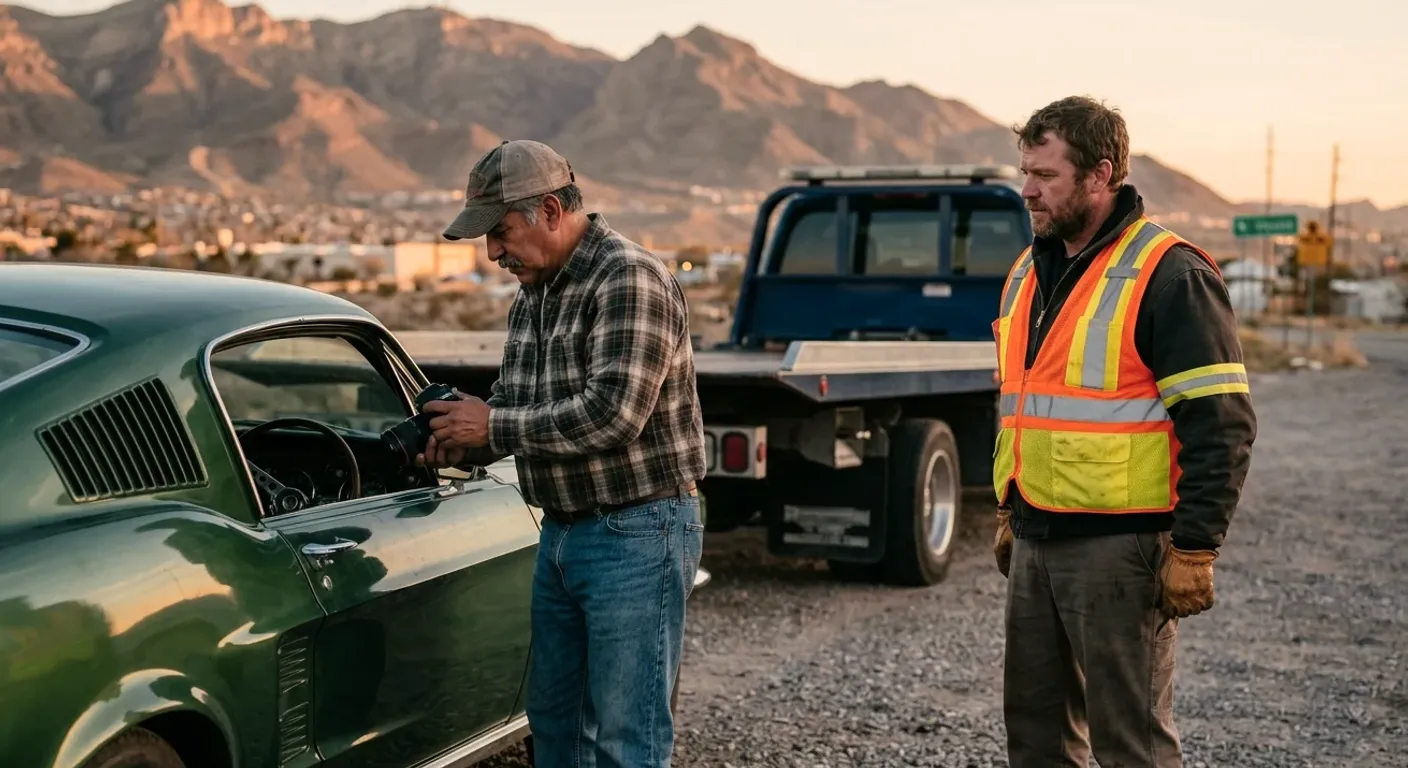
Document the car’s current condition
Start with clear photos before the operator arrives. Photograph all four sides, each corner, the roof, and the visible underside. Take closer pictures of existing scratches, cracked trim, loose parts, and worn paint. Include the wheels, tires, mirrors, glass, bumpers, and exhaust tips.
Use steady daylight when possible. West El Paso’s bright sun can hide details through glare, so check each image before moving on. If the car sits inside a garage, open the door and turn on the available lights. Don’t move the vehicle merely to improve the photos if its condition makes that uncertain.
Save a short written condition list with the images. Note anything that’s already loose, missing, or difficult to operate. Include removable items such as fender skirts, antenna pieces, wheel covers, or a detachable roof panel. Don’t assume an operator will recognize every modification by sight.
Photograph the odometer and dashboard with the ignition off. If warning lights appear when the ignition is turned on, record those separately. You can also capture a short video showing the car’s exterior and parking position. This creates one organized record you can review with the operator.
Remove personal belongings before pickup. Ask the operator what should remain inside the car. Keep the keys, photos, destination details, and ownership documents together. Don’t leave irreplaceable records, trophies, spare parts, or memorabilia in the trunk.
This preparation applies to classic, collector, and exotic car towing in West El Paso. It doesn’t guarantee that damage can’t occur. It gives you and the independent operator a shared view of the car before loading begins.
Share steering and wheel details
Tell the operator exactly what works before discussing a towing method. Start with the steering, transmission, brakes, wheels, tires, and parking brake. A car that rolls freely presents a different planning question from one with a locked wheel or seized brake.
Be specific about the transmission. Say whether it’s manual or automatic and whether the shifter moves. Explain if the car can enter neutral without starting. Don’t force a shifter, steering wheel, or parking brake to make the car easier to move. Tell the operator what’s stuck and let that operator plan around it.
Report every flat, damaged, missing, or unusually sized tire. Mention custom wheels, narrow whitewalls, wire wheels, wheel covers, and exposed suspension parts. If the steering doesn’t unlock, say which direction the front wheels face. If you don’t have the keys, disclose that during the first conversation.
Older cars may also have controls that aren’t obvious. Explain any unusual ignition sequence, battery cutoff, hidden release, or separate trunk key. Share instructions you know, but don’t experiment with unfamiliar controls during pickup.
Modifications matter too. Tell the operator about lowered suspension, side pipes, extended exhaust components, front splitters, rear-mounted spares, or nonstandard bodywork. These details help the operator evaluate the car and the pickup setting. The independent tow company still decides what equipment and method fit the job.
You can verify a Texas operator through the TDLR license search. Select the tow truck operator license type, then search using the available name, city, county, ZIP code, or license information.
Identify clearance and access limits
West El Paso pickup conditions can change within a short drive. A car near Mesa Street may sit in a commercial lot. Another may be inside a hillside garage below the Franklin Mountains. A third may be stored behind a home near the New Mexico line.
Walk from the car to the street and describe the full path. Look for a low garage opening, narrow gate, tight corner, steep driveway, soft ground, curb, overhead branch, or parked vehicle. Measure openings when you can do so safely. Give the operator the actual measurement rather than saying a space is “probably wide enough.”
Photograph the driveway from both directions. Include the garage entrance, street approach, gate posts, and any turn between the car and the road. If access comes through an alley or controlled parking area, explain how entry works. Confirm who can open gates or move blocking vehicles.
Don’t promise that a particular truck can fit. Quick Tow EP doesn’t own equipment or choose the towing setup. The operator you’re connected with reviews the vehicle and access details, then decides whether the proposed approach works.
Location wording also matters. “West El Paso” isn’t enough for planning. Share the full pickup address and identify the nearest usable entrance. Note whether access comes from Mesa Street, I-10, Loop 375, or another named road. Those details help prevent confusion between a property entrance and its mailing address.
Sunland Park is across the New Mexico state line. If the car or destination is there, say so clearly. Texas rules don’t govern a New Mexico tow. No verified New Mexico towing price is available in the approved information, so confirm the governing terms and total directly with the operator before hookup.
Confirm the pickup and destination
Give the operator two complete addresses before agreeing to the tow. Include a business name, unit number, gate instructions, or repair-shop entrance when applicable. A map pin can help identify the right driveway, but it shouldn’t replace the written address.
Confirm that someone can legally release the car at pickup. That person should have the keys and any documents the operator requests. At the destination, confirm that someone can receive the vehicle. Ask where the car should be placed and whether the receiving location has its own access limits.
Westside routes can lead toward I-10, Mesa Street, or Loop 375 over Transmountain. Don’t choose a loading method based on the route name alone. Instead, tell the operator where the car starts, where it’s going, and whether either location has a constrained entrance.
State lines require extra clarity. A move from West El Paso to Sunland Park, Santa Teresa, or another New Mexico destination crosses into a different jurisdiction. Say that during the first call. Don’t describe the job as merely “local” and leave the state change for later.
A planned tow requested by the owner is a consent tow. The operator sets the price. Quick Tow EP doesn’t set rates or quote totals. Ask what information the operator used to calculate the price. Confirm the total and payment terms directly with that operator before the vehicle is hooked up.
If the destination changes, tell the operator before loading begins. Don’t assume a repair shop, storage building, residence, or event venue will accept the vehicle. Contact the destination yourself and confirm its entrance, receiving instructions, and access arrangements.
For a planned collector-car move, our exotic and classic car towing referral page explains how Quick Tow EP connects callers with independent local operators.
Review the towing method with the operator
Some owners begin by searching for “flatbed classic car El Paso.” A requested truck type isn’t the same as an approved towing plan. The operator needs to examine the vehicle, wheel condition, clearance, and pickup space before choosing a method.
Ask the operator to explain the proposed loading and unloading process. Point out the lowest visible bodywork and every loose component. Review the steering position, transmission state, brake condition, keys, and tire problems again. This final review can catch details missed during the first call.
Don’t direct the operator to attach equipment to a specific component unless the operator requests information from you. Classic cars vary widely, and modifications may change what’s visible underneath. The independent operator is responsible for choosing the working method.
If you requested flatbed towing, confirm whether the operator believes that method fits the actual car and location. Don’t assume a flatbed can enter every Westside garage, driveway, or enclosed parking area. Share the access photos before pickup whenever possible.
Ask what the operator needs you to do before loading. That may include handing over keys, identifying a cutoff, or stepping away from the working area. Follow the operator’s directions at the scene. Keep children, pets, and bystanders away from the vehicle and towing equipment.
Review the condition photos together when practical. Confirm the destination one more time. Ask the operator for an arrival estimate, but remember that Quick Tow EP doesn’t promise one. The referral line may also go to voicemail when nobody is free.
No towing method supports a promise of damage-free transport. Preparation reduces uncertainty, but it doesn’t create a warranty. Your best contribution is accurate information, clear access, and a complete record of the car before it moves.
When to call us
Call when a classic or exotic car can’t be moved normally, has limited clearance, or needs an operator to assess the towing method. Call us at (915) 615-5465 and we’ll connect you with an independent licensed operator who handles this work. If nobody picks up, leave a voicemail.