Don’t authorize a flat tow based on generic advice. We couldn’t confirm one rule covering every Tesla model and year. Check the current owner’s manual for your exact car before any wheels move.
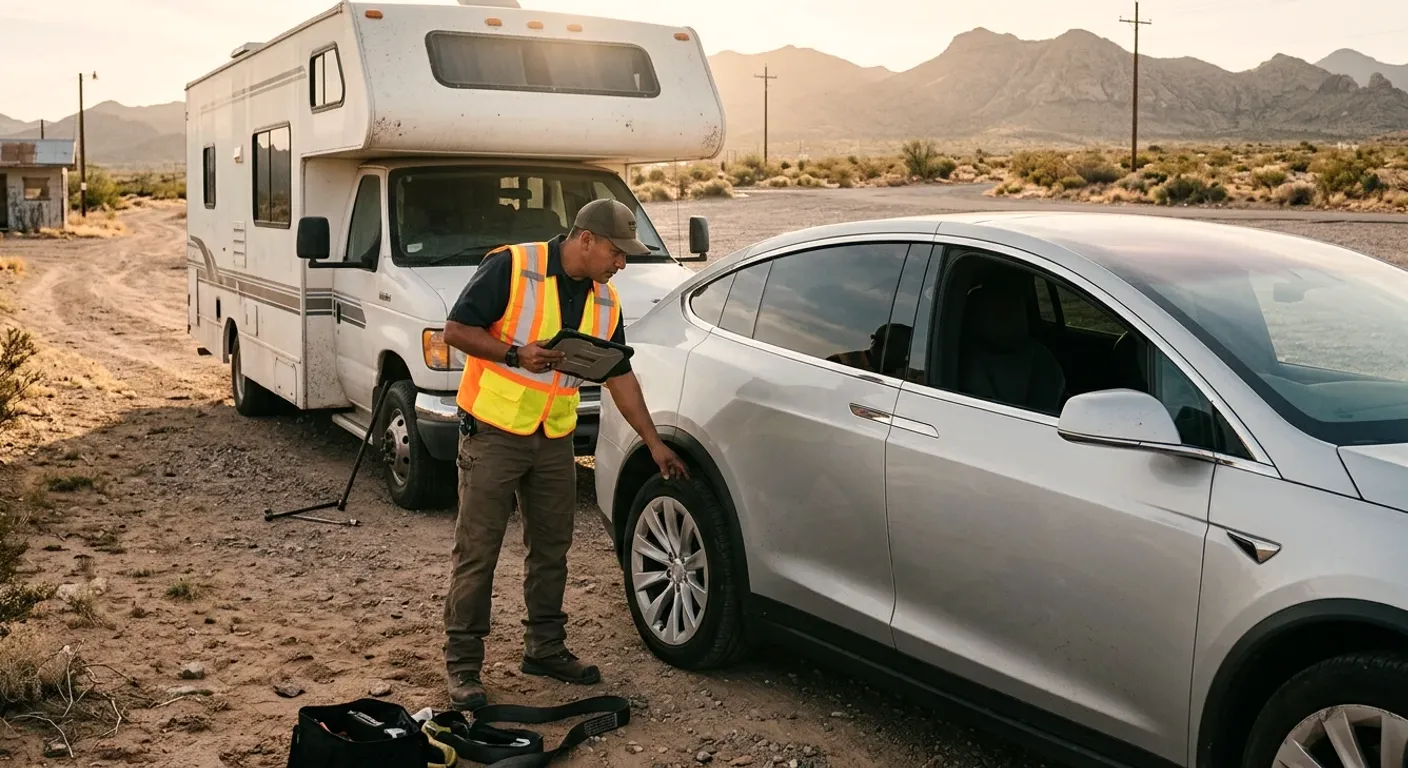
Why drivetrain layout changes the towing method
A towing method must match the vehicle’s specific transport instructions. Body style alone doesn’t answer the question. Two cars that look similar may have different model years, equipment, or manufacturer directions.
That’s why a general answer about “all electric cars” isn’t enough. The same applies to advice copied from a forum, video, or another driver. It may concern a different vehicle configuration. It may also be outdated.
We couldn’t confirm an approved, model-by-model Tesla towing rule for this page. That means we won’t claim that a certain wheel position, towing accessory, or procedure works for every Tesla. The current manual for the exact vehicle remains the controlling source.
Tell the operator the model, model year, and current condition. Mention whether the car can power on. Explain whether it rolls, steers, or has damaged wheels. Don’t test those functions if doing so feels unsafe.
Location matters too. A disabled car beside I-10 presents a different problem than one parked at home. Loop 375, US-54, Montana Avenue, and Mesa Street also have different roadside settings. Tell the operator whether the car is in a travel lane, on a shoulder, inside a garage, or behind a gate.
Avoid describing the car as “fine except for the battery.” That leaves out information the operator needs. A complete description helps the tow company compare the situation with the manufacturer’s current instructions.
Check the manual for your exact Tesla model
Use the owner’s manual tied to the car’s exact model and year. Don’t rely on instructions for a newer vehicle with the same name. Don’t assume an older copy still reflects the current guidance.
Find the manual through the manufacturer’s official source available for your vehicle. Review the sections covering towing, transport, roadside situations, and loading. Follow the stated method and restrictions exactly. If the instructions aren’t clear, pause before the vehicle is moved.
Keep the relevant section open when the operator arrives. A screenshot can help if the roadside signal is weak. Make sure the page shows the model and year when possible. That reduces the chance of someone reading directions for another car.
The manual may use exact terms for controls, loading steps, or permitted wheel positions. We couldn’t verify those model-specific terms through the approved claims ledger. We therefore won’t reproduce a procedure that might not apply to your Tesla.
Don’t substitute instructions from another electric vehicle. Tesla guidance should come from the current Tesla material for that car. Likewise, advice for one Tesla shouldn’t automatically be applied to another.
If the car belongs to someone else, ask the owner for the correct manual. Rental, company, and fleet vehicles may also require approval from whoever controls the vehicle. Confirm that before authorizing movement.
Our Tesla and EV towing referral page explains how Quick Tow EP connects El Paso-area drivers with independent operators. The operator handles the towing decision with the driver and is paid directly.
When a flatbed may be the appropriate method
A flatbed may be considered when the vehicle’s current manual calls for that transport method. It may also enter the discussion when the operator needs to keep the car’s wheels off the road. The exact choice still depends on the vehicle instructions and its condition.
We couldn’t confirm that every Tesla always requires a flatbed. We also couldn’t confirm that every Tesla can be loaded using one universal procedure. A responsible answer must stop there instead of filling the gap with a guess.
Ask the operator what equipment is proposed. Then compare that plan with the exact manual. If the two conflict, don’t approve the move until the conflict is resolved.
A car with wheel, tire, steering, or collision damage needs a careful description. Photograph visible damage before movement when it’s safe. Tell the operator if the vehicle sits unusually low or faces an obstruction. Mention tight turns, parking structures, steep driveways, curbs, or locked access points.
El Paso weather can change the roadside decision. July’s normal average high is 96.1°F. Monsoon season from July through September can bring short, intense storms and flash flooding. March and April bring dust and wind, including low visibility on I-10.
Drivers comparing equipment can read about flatbed towing referrals. Quick Tow EP doesn’t own a flatbed or select equipment for the job. We connect callers with independent, separately licensed local tow operators.
What to tell the independent tow operator
Start with the car’s exact model and model year. Give the operator the precise pickup location and intended destination. On long roads, a nearby exit, cross street, or business is more useful than saying “east El Paso.”
Describe the car’s condition without diagnosing it. Say what happened and what you can observe. For example, report that the display won’t turn on, a wheel appears damaged, or the car stopped after a collision. Don’t claim a component failed unless that failure was confirmed.
Tell the operator whether the vehicle is:
- In a travel lane, shoulder, driveway, garage, or parking structure
- Facing uphill, downhill, or toward an obstruction
- Blocked by another vehicle, gate, curb, or low clearance
- Carrying passengers, pets, or important personal property
- Near the Texas and New Mexico state line
The state line matters. Sunland Park and Santa Teresa are in New Mexico, not Texas. Texas towing rules don’t govern a tow there. If the pickup is near the line, provide an exact address or map pin.
Ask which towing method the operator plans to use. Confirm that the operator has the exact model information before agreeing. Tell the operator that you have the current manual available. Ask for an arrival estimate, but understand that Quick Tow EP doesn’t promise one.
Texas requires towing operators and towing companies operating over public roadways to hold the applicable licenses. Consumers can check a Texas operator through the TDLR license search. Select the towing license type and search using the information provided by the operator.
The operator sets the price. Confirm the proposed charges directly with that operator before the vehicle is hooked up. Quick Tow EP doesn’t set prices or quote totals.
What to check before the car is moved
First, match the vehicle to the manual. Verify the model and model year instead of relying on appearance. Keep the applicable towing or transport section open for the operator.
Next, compare the proposed method with those instructions. Don’t approve a setup merely because it worked for another driver. If any instruction seems uncertain, ask the operator to stop and review it with you.
Document the car’s visible condition when you can do so safely. Take clear photos of each side, the wheels, and existing body damage. On I-10, Loop 375, or US-54, personal safety comes before documentation.
Remove loose personal property if the location permits. Keep identification, keys, and any destination information with you. Confirm where the vehicle is going and how the receiving location will accept it.
Before movement, check these points with the operator:
- The exact vehicle model and year were communicated
- The current owner’s manual was reviewed
- Existing wheel or body damage was disclosed
- The pickup and destination were confirmed
- Access limits and clearance concerns were discussed
- The towing method matches the available manufacturer instructions
- The operator’s proposed charges were confirmed directly
Follow the independent operator’s directions around the work area, unless those directions conflict with the manufacturer’s current instructions or create an immediate hazard.
If the car is on Fort Bliss, installation rules apply. Quick Tow EP doesn’t describe base procedures. If it’s off post on an El Paso city street, give the operator the exact location rather than simply saying “near Fort Bliss.”
When to call us
Call when your Tesla can’t be moved normally and the current manual points toward professional towing equipment. Call us at (915) 615-5465 and we’ll connect you with an independent licensed operator who handles this work. If nobody picks up, leave a voicemail.